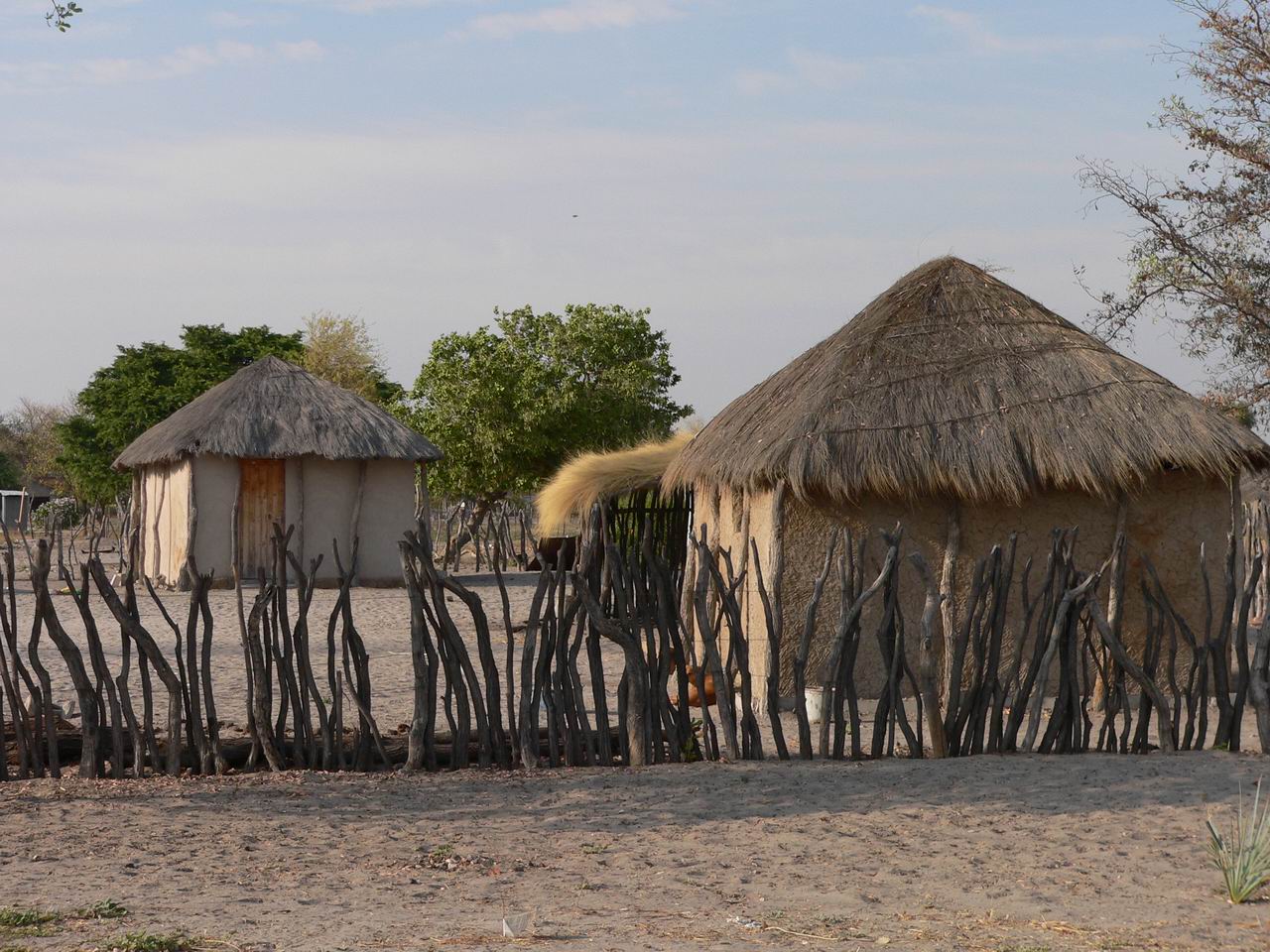
Gweta downtown
An early breakfast and by 7.15 we were ready to take off with Viapu - the guy who had fetched us the day before at the airstrip, who was our guide for the day.
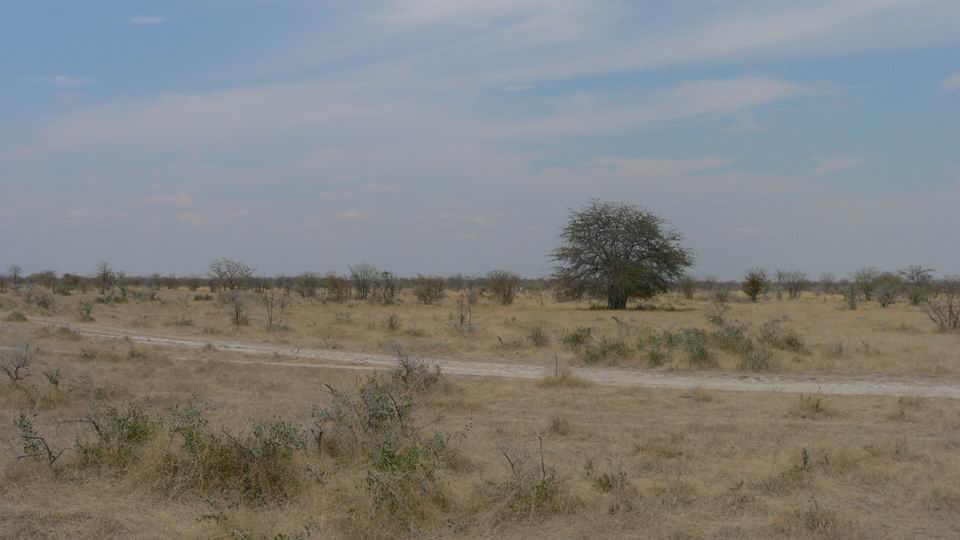
Pretty dry ...
We wanted to call the bank in Francistown regarding the credit card. Since the bank didn't open before 8.30 we first went to Gweta in order to stay in cell- coverage area. Gweta is an interesting town with mud huts being the prefered way of building, which is not that surpising: It's cheap, you have all the building material at hand (temite mounds and cow dung), and you don't need an architect but can build it yourself.
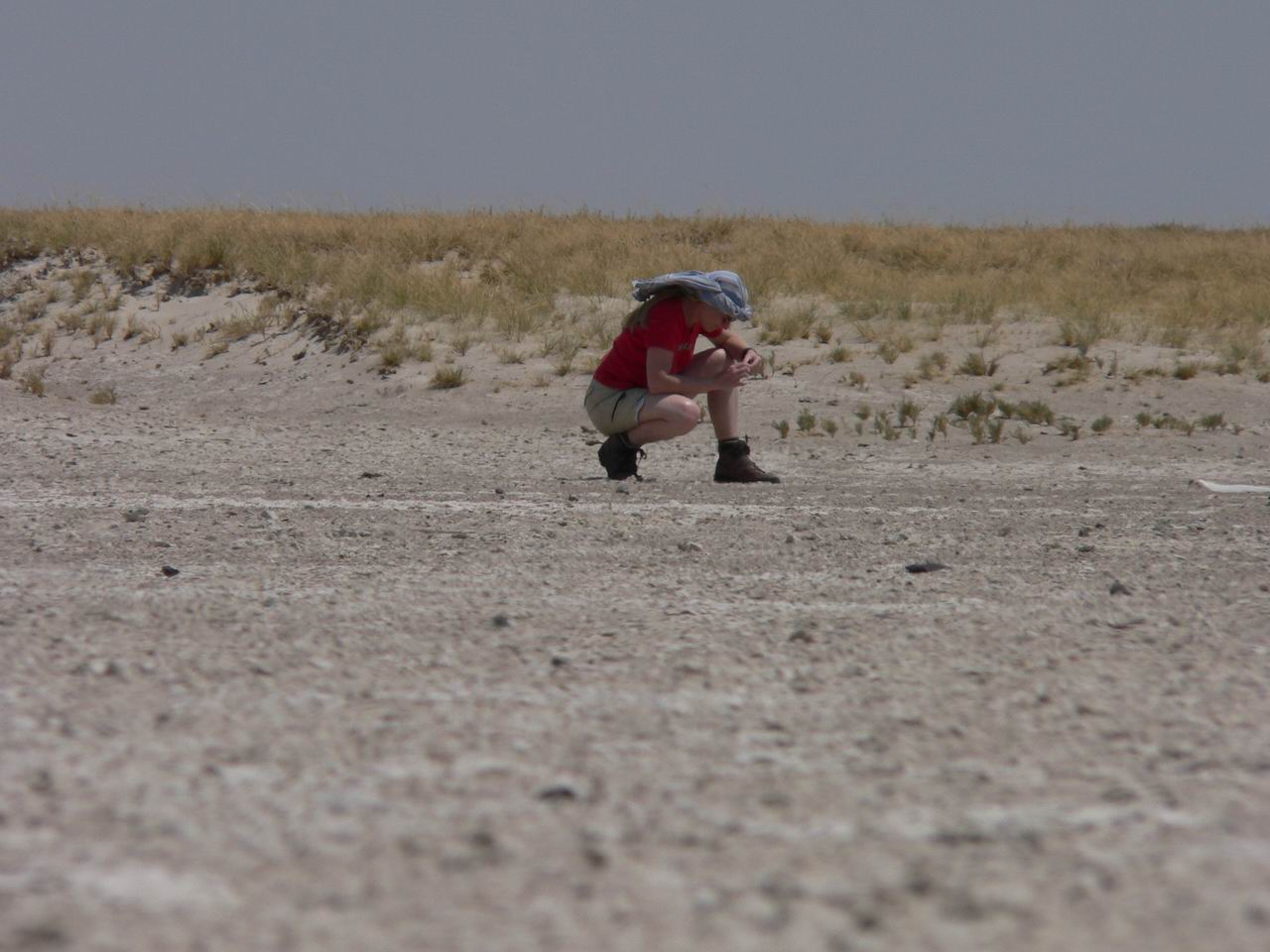
Looking for prehistoric leftovers
It was still not yet 8.30, so Viapu took us to check on our plane. The tie-down of the airplane had given us quite some thought and we wanted to check if everything was ok (there had been a bit of wind the evening before). Everything was fine. Still we turned the plane to point in the general wind-direction (from east) and replaced the tie-down plugs with heavy concrete plates since it was impossible to get the plugs into the stony ground.
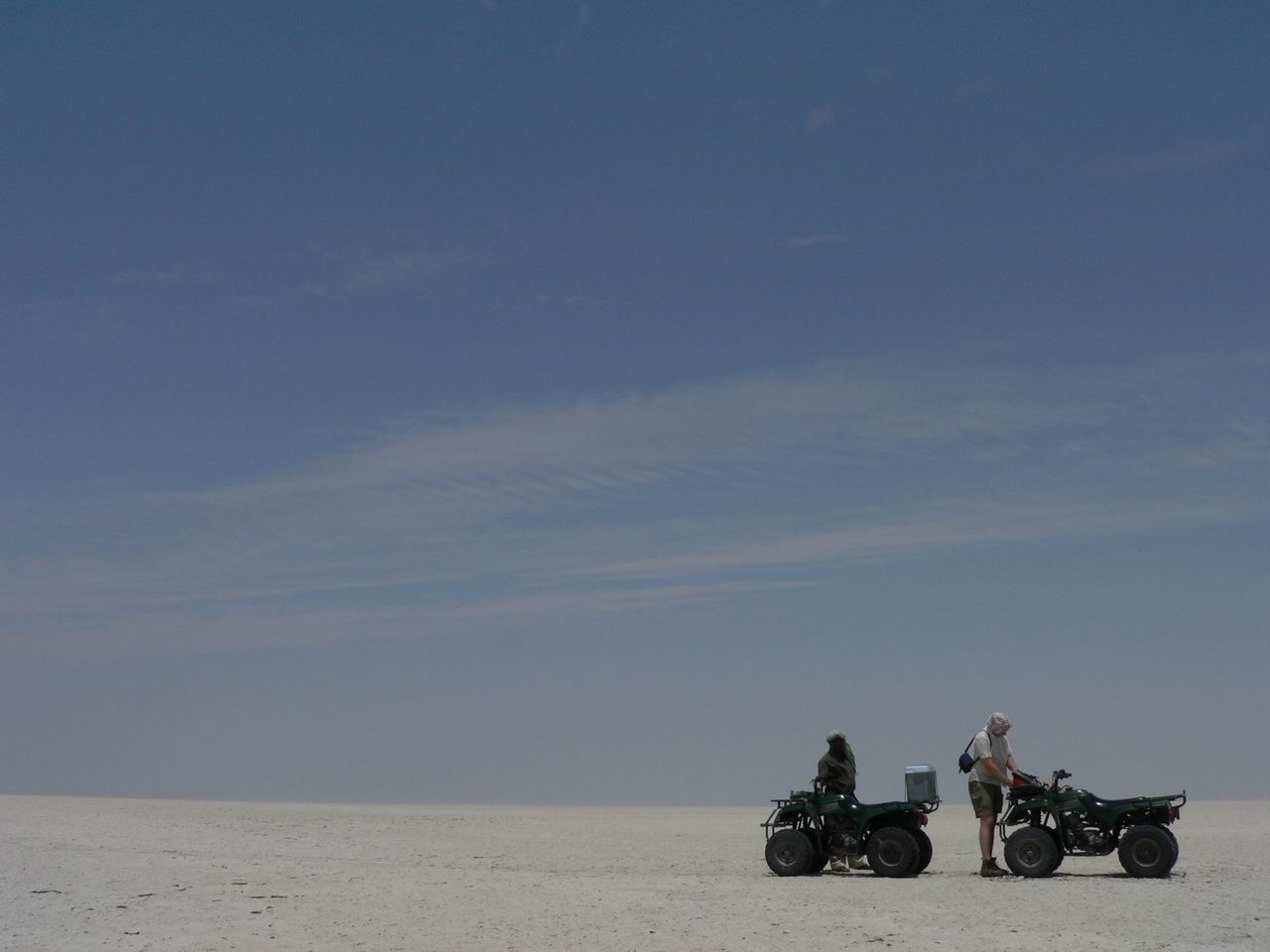
Vast amounts of nothing
Finally we managed to get hold on the bank in Francistown. There isn't any branch of the Standard Chartered Bank in Kasane, and the only other city we are going to in Botswana is Maun, so we agreed that they send the card to Maun. However, it is doubtful that it arrives in Maun before us.
Then we drove over the open plane down to the pan. We saw several animals on the way: secretary birds, ostriches (one with two babies), and mongoons.
At the pan we were met by two people with two quad bikes. Viapu put scarfs on our heads to protect us from the sun. Then we went out on the pans, Viapu on one bike and us on the other.
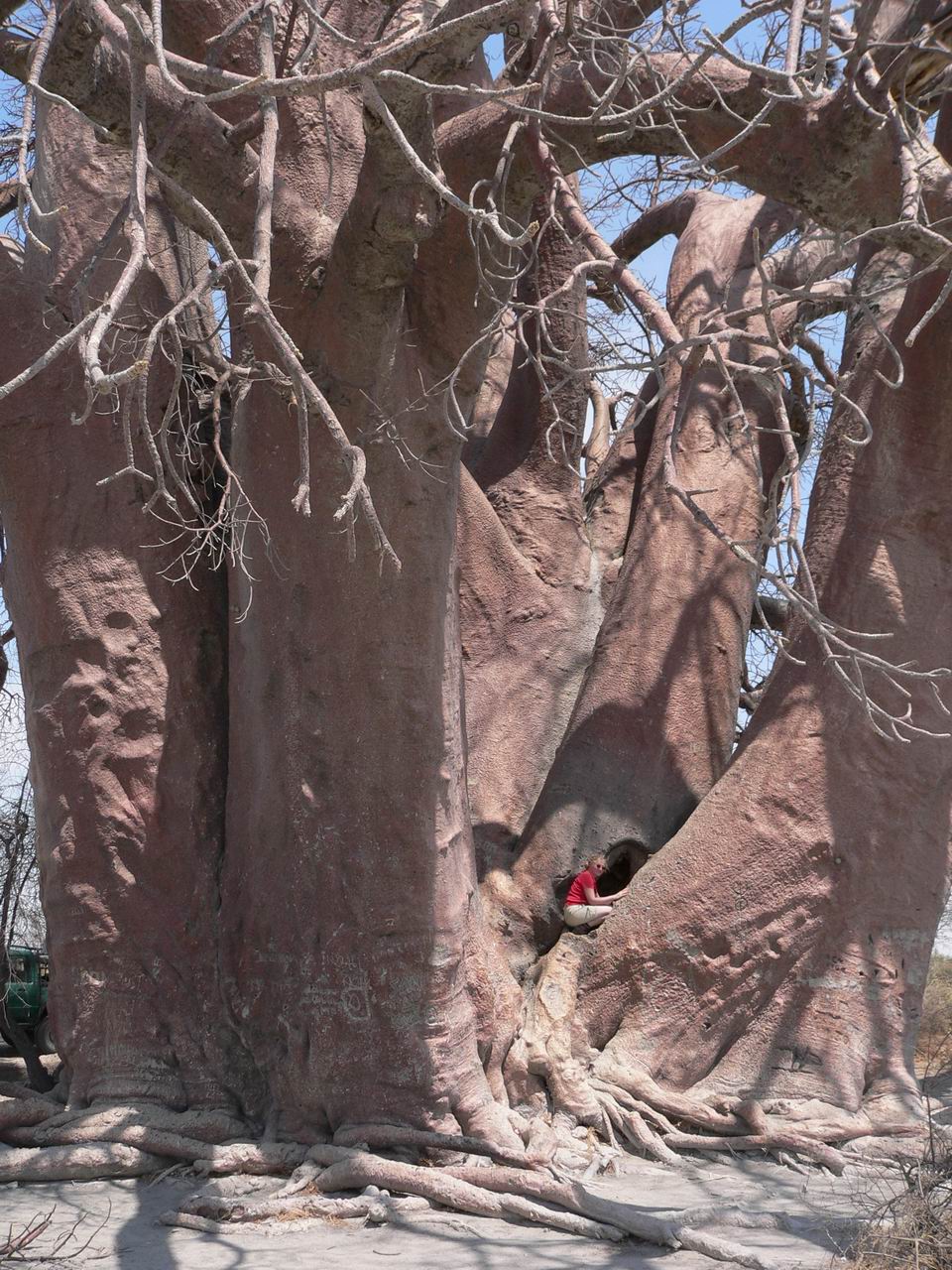
The biggest baobab
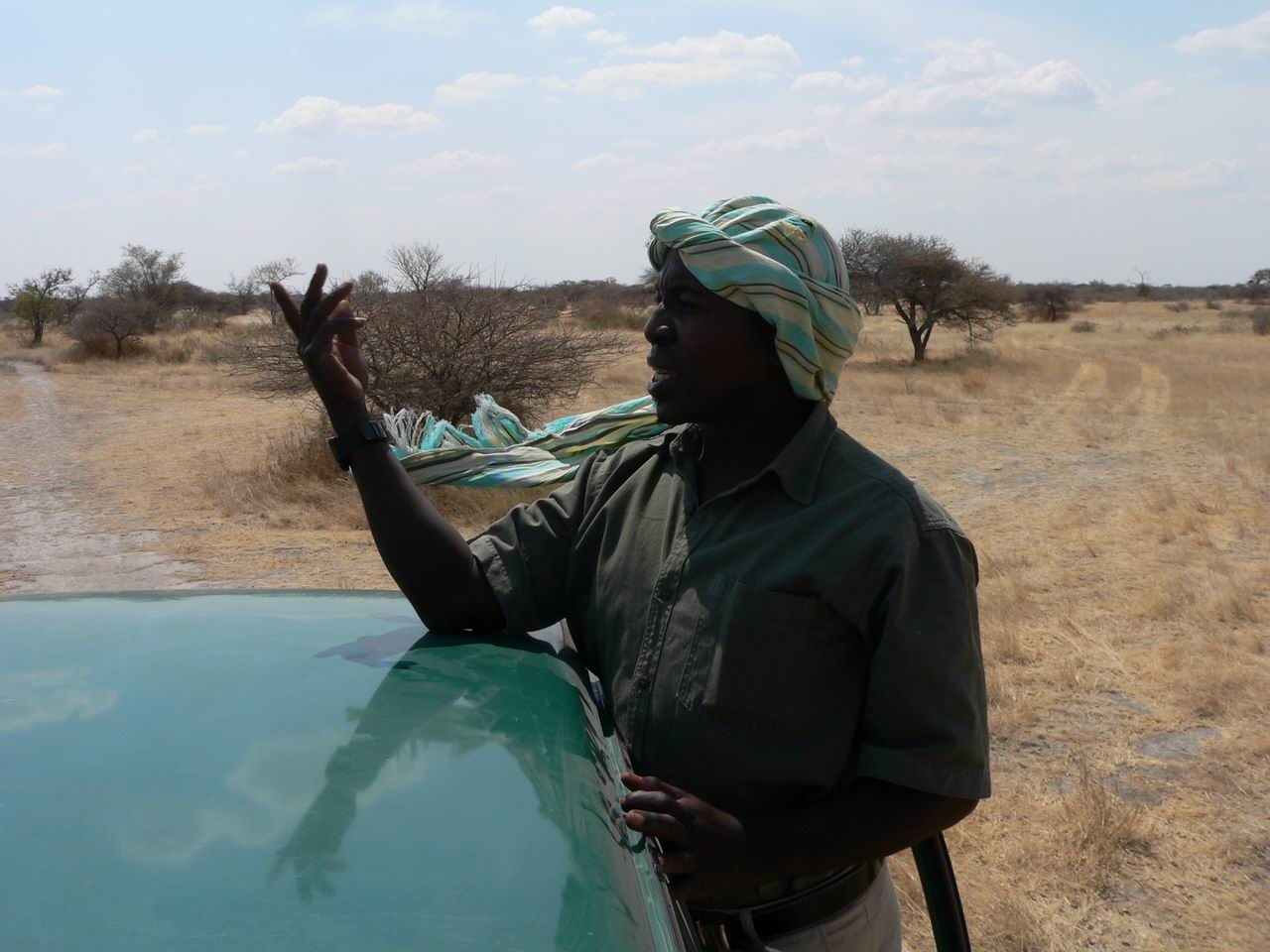
Viapu
First stop was at a place where there had been living people many thousands years ago. We went looking for stone tools (spear tips and the like), and afterwards Viapu showed us a place where he had hidden his private collection.
We went further out on the pan. It is an unreal place. There is practically nothing to see in any direction.
At max-speed we went back to the car (Toyota Hilux) and drove to the biggest Baobab tree we've ever seen. The tree was earlier used by explorers as a point of navigation and also as 'post office' (hole in the tree where you could leave messages). The earliest carving on the tree was dated 1873 (if we remember correctly). Livingstone, amongst many others, was also here and used the tree. We had our lunch here.
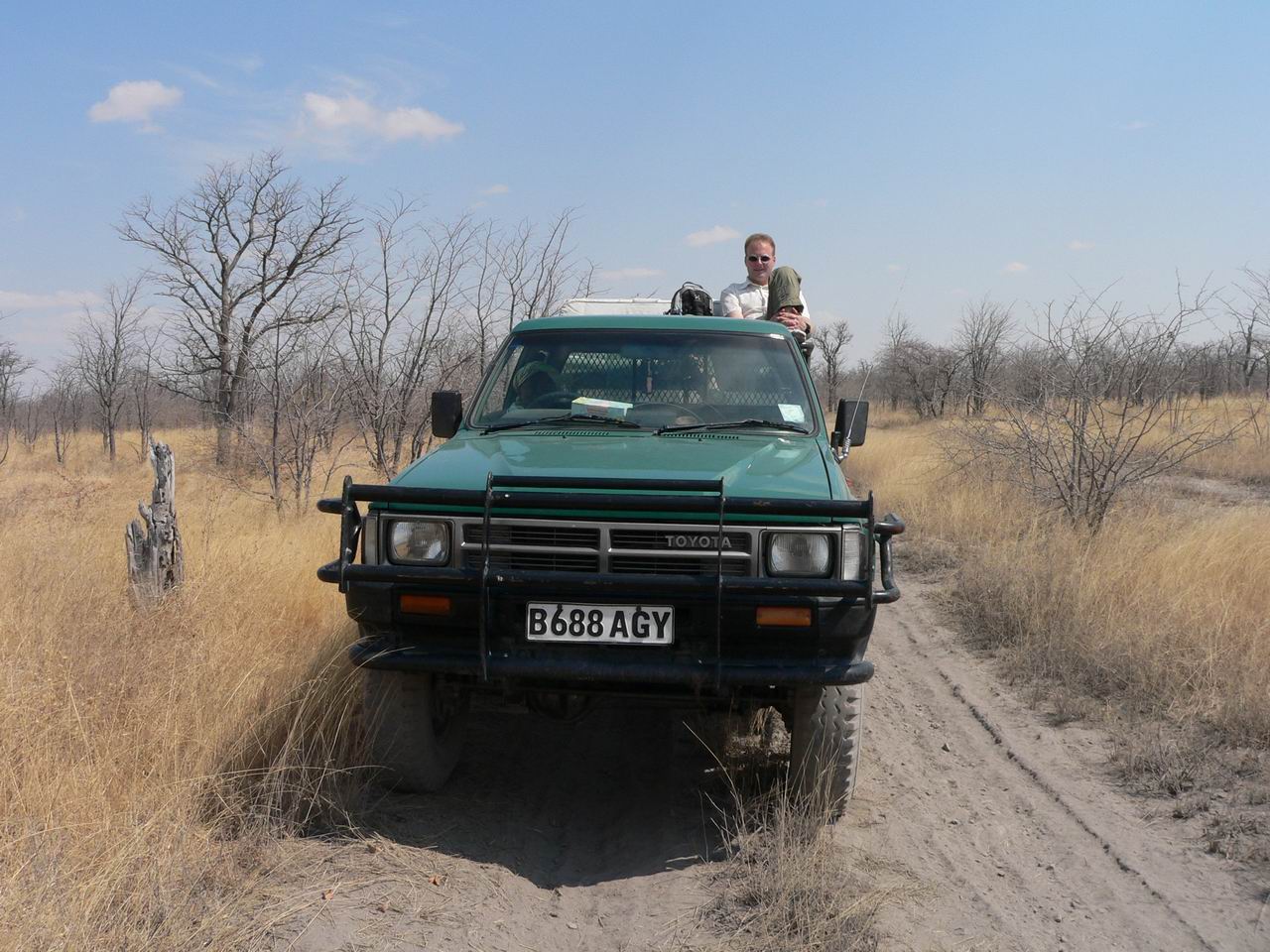
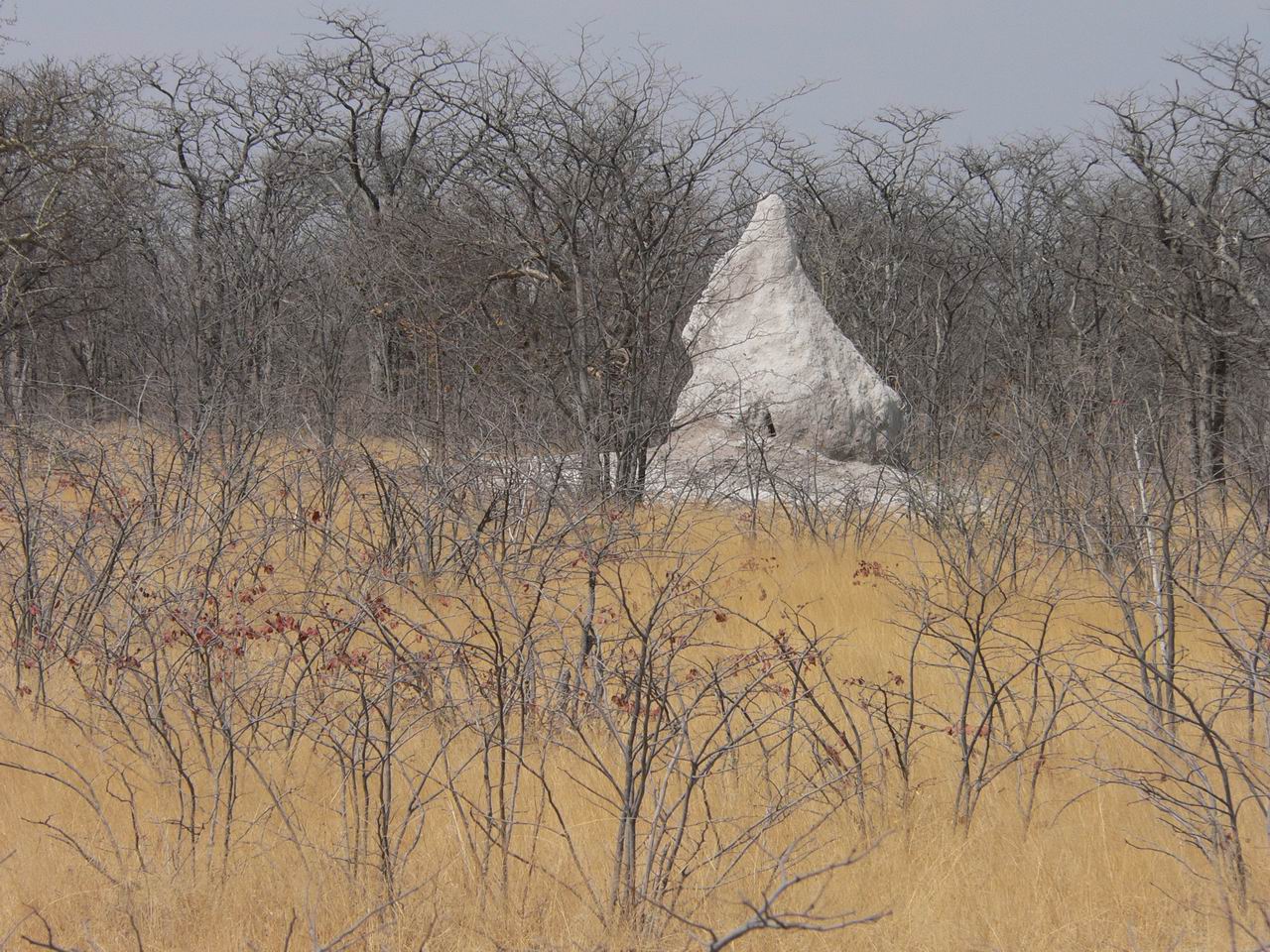
Driving through the bush on the way back to Planet Baobab
Another tree we passed on the way back was Greens tree - another national monument which besides a navigation point was used by earlier traders as a meeting point.
We went to the waterhole again, and the elephants came shortly after us. 8 of them this time and they got there a bit earlier than last night, so we were able to see them better.
/ Klaus & Linda