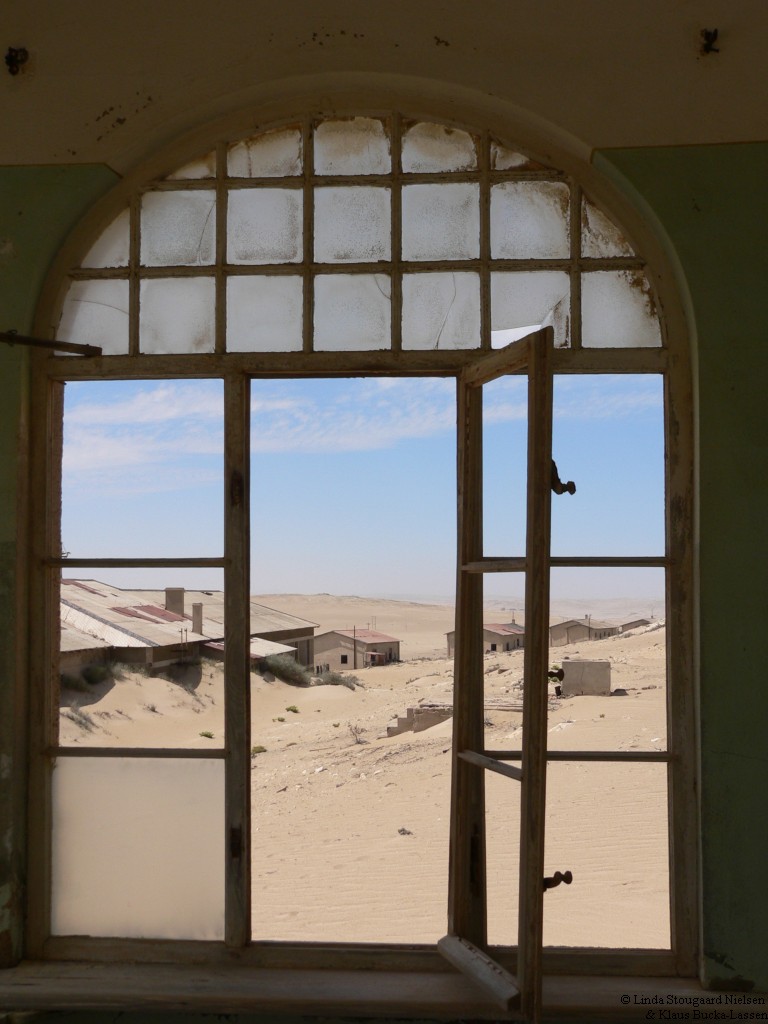
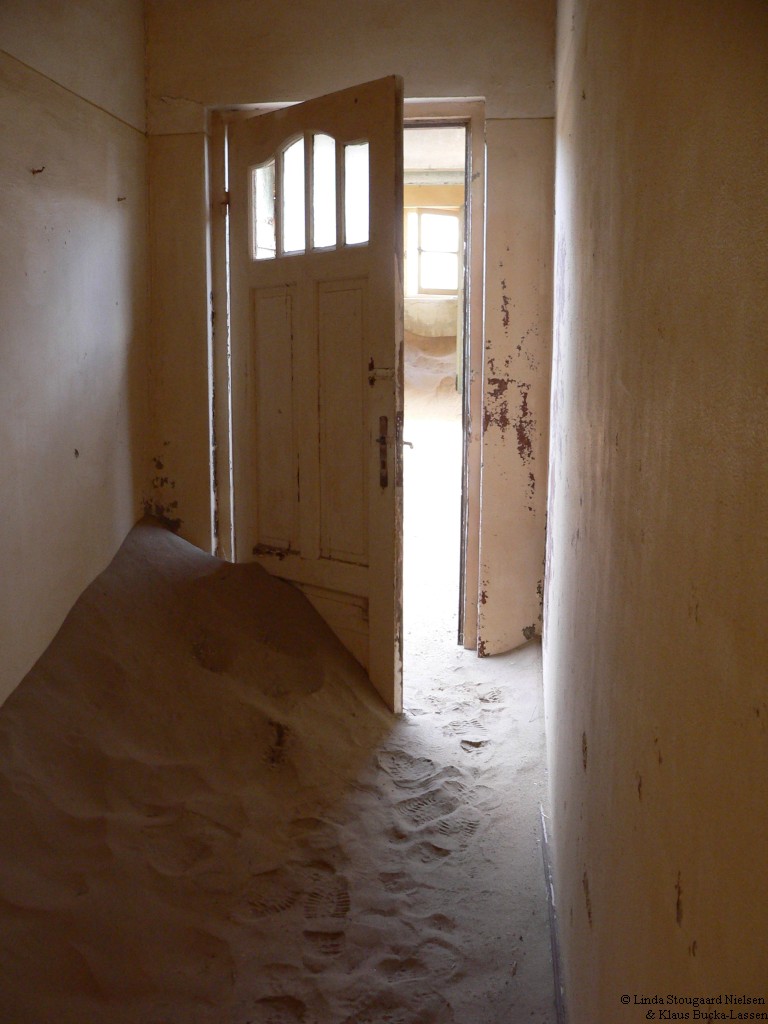
Kolmanskuppe
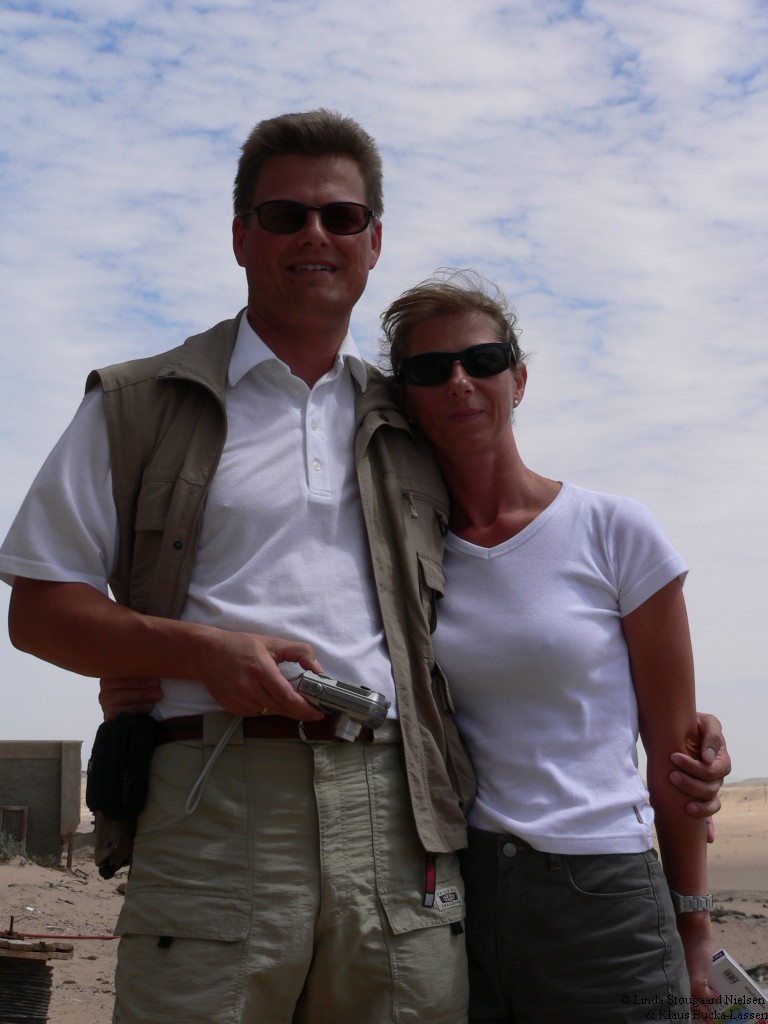
Cordia & Dirk
Kolmanskuppe is very interesting (see below under the 'Luderitz' section for details). The sun was shining and there was practically no wind.
The place closes at 13.00 so that's when we left. While we had been sitting inside for lunch the wind had picked up a fair bit. In fact I considered us in the middle of another minor sand storm, while the locals rather would have declared it a light breeze: "Oh, this is nothing, you should see it in summer ...". Dunes had already started to build halfways over the road.
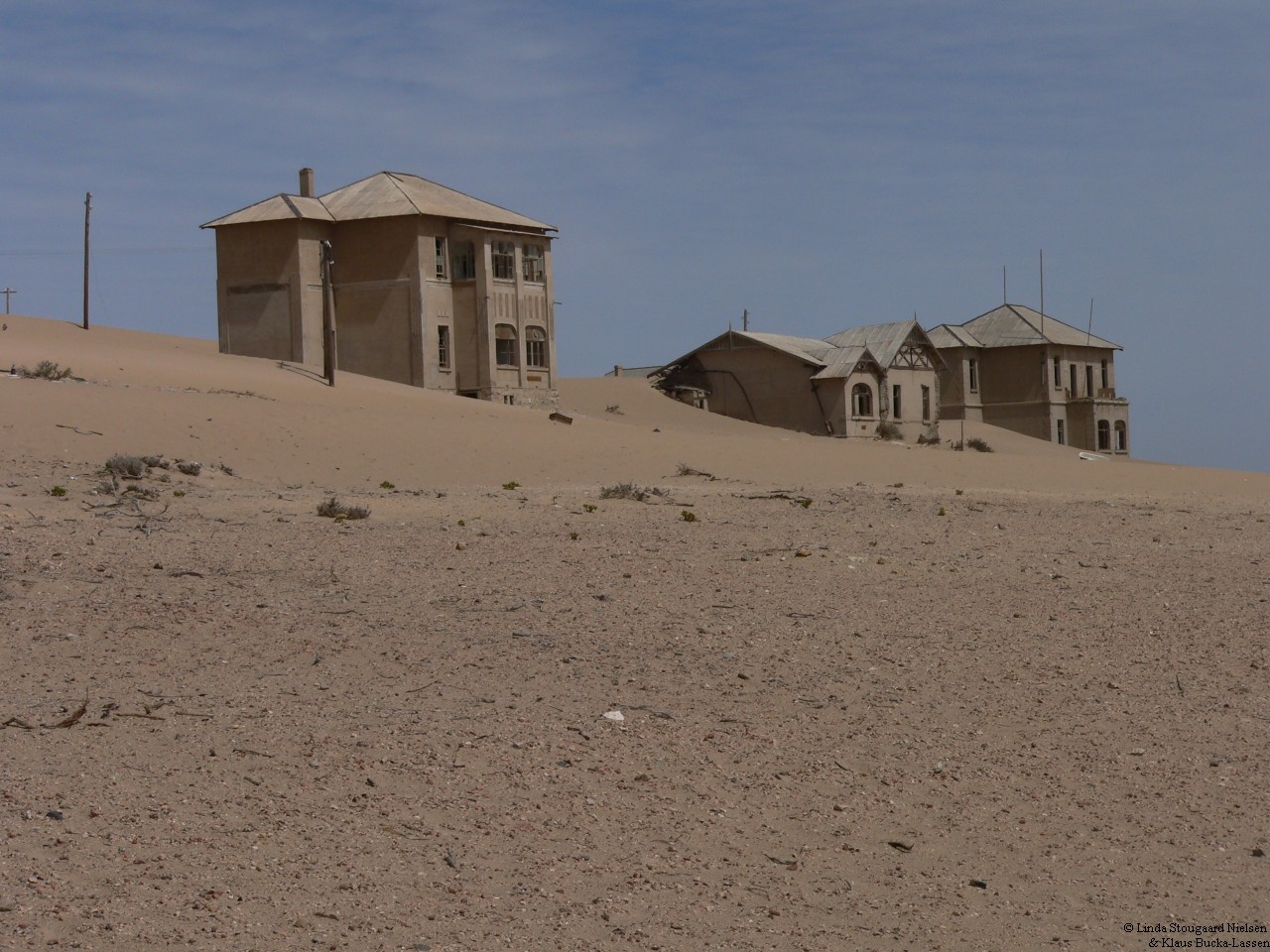
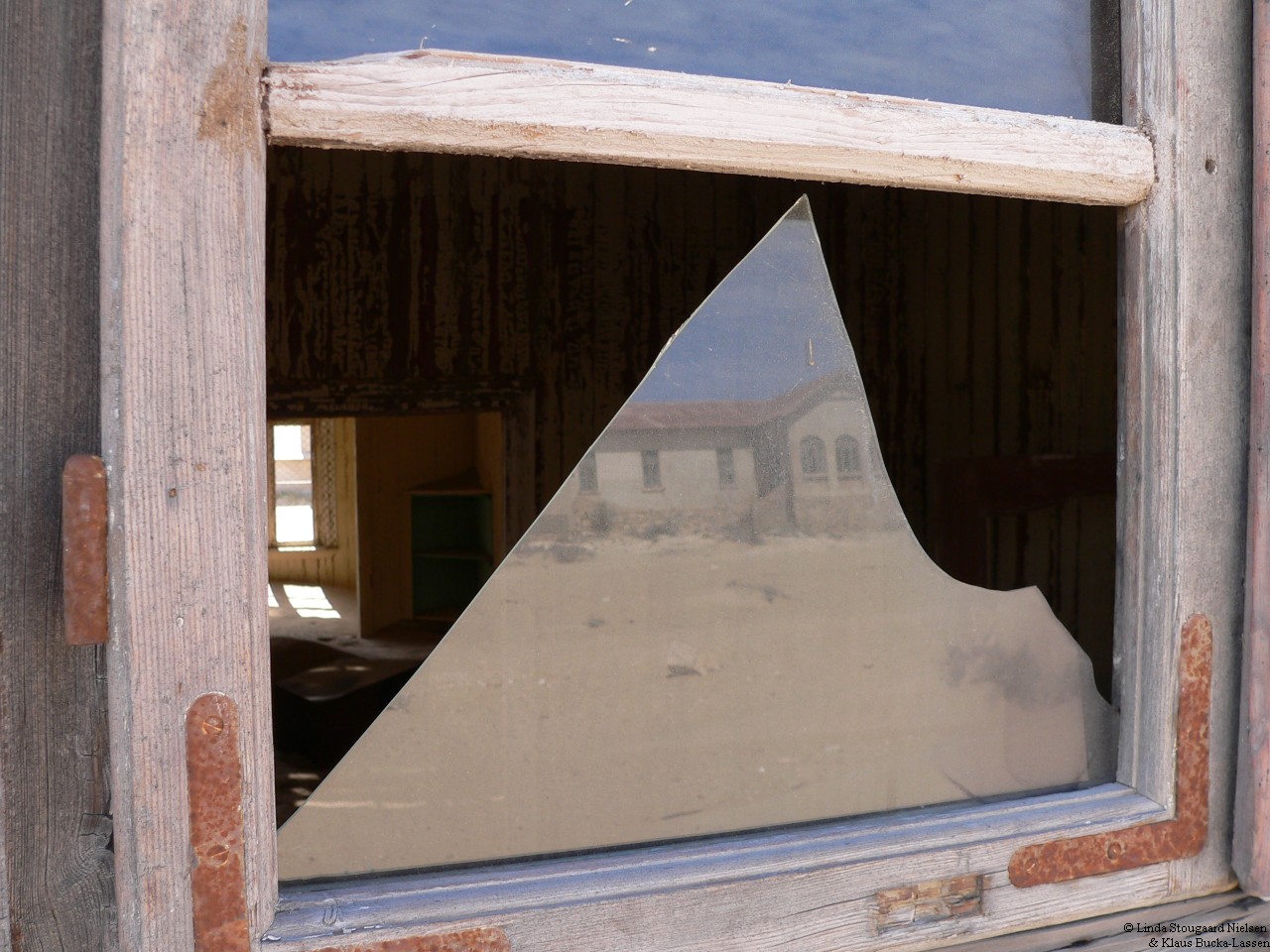
Kolmanskuppe
We were a bit concerned. According to the monitor in the airport officers room the wind was blowing at an average of 27 knots and gusting up to about 32. Luckily we had refuelled upon arrival - I would have hated to do it with all the sand in the air. It was bad enought that we had to feed the engine a liter of oil because the level was too low. The first funnel (we always make them ourselves out of small plastic water bottles where we cut the bottom of) immediately blew away - I tried to catch up but didn$t stand a chance. Now there is a piece of plastic somewhere in the "Sperrgebiet" south of Luderitz because of me - sorry.
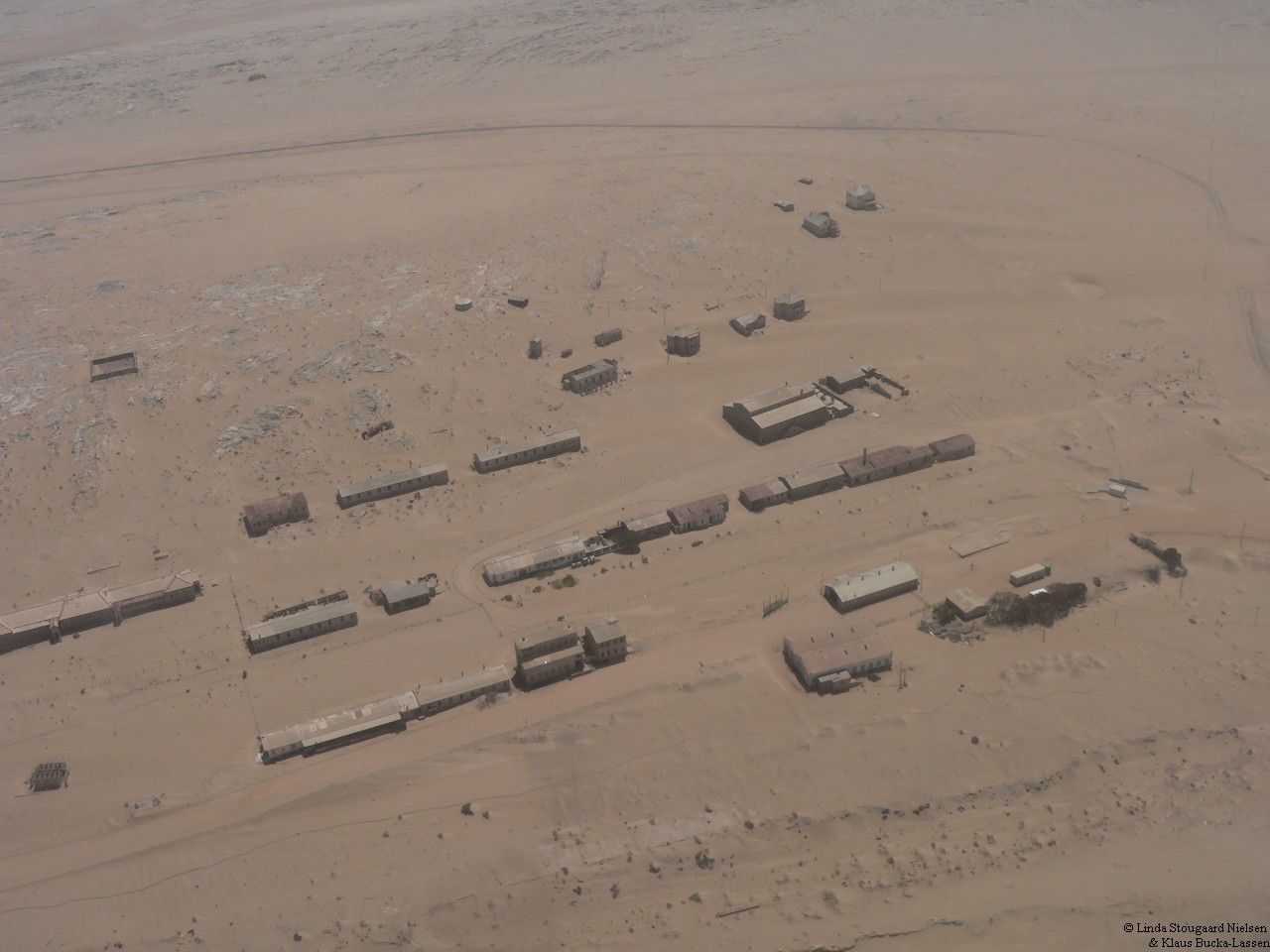
Kolmanskuppe
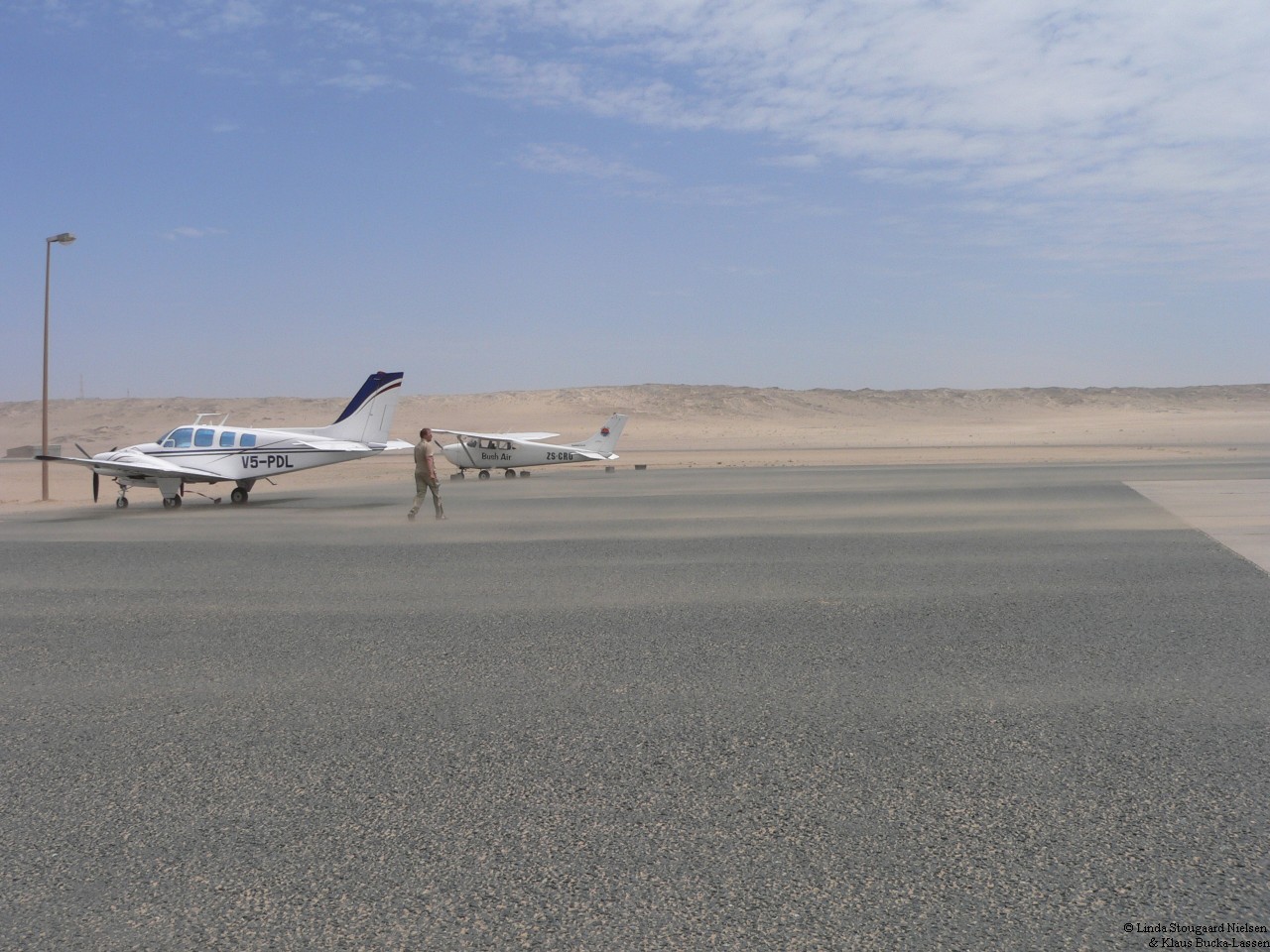
Sandstorm
We were still not sure - should we stay or should we go. It was a pretty steady wind from the south so runway 22 wouldn't be that bad to take off from. The officer to whom I paid the landing (NAD 91) and parking (2 * NAD 15) fee said that it would be no problem at all, so off we took ... and there was no drama to that. I let the plane pick up a lot of speed before I pulled the yoke back.
At times we only had a ground speed of about 60 miles per hour. Not much considering the air speed indicators needle was pointing at 120 at the same time.
We tracked south along the coast and saw many current diamont mining facilities and even more left-overs from the earlier haydays when the diamonds still could be picked up by hand just like that. Not many people get to set this as it all is 'Sperrgebiet'.
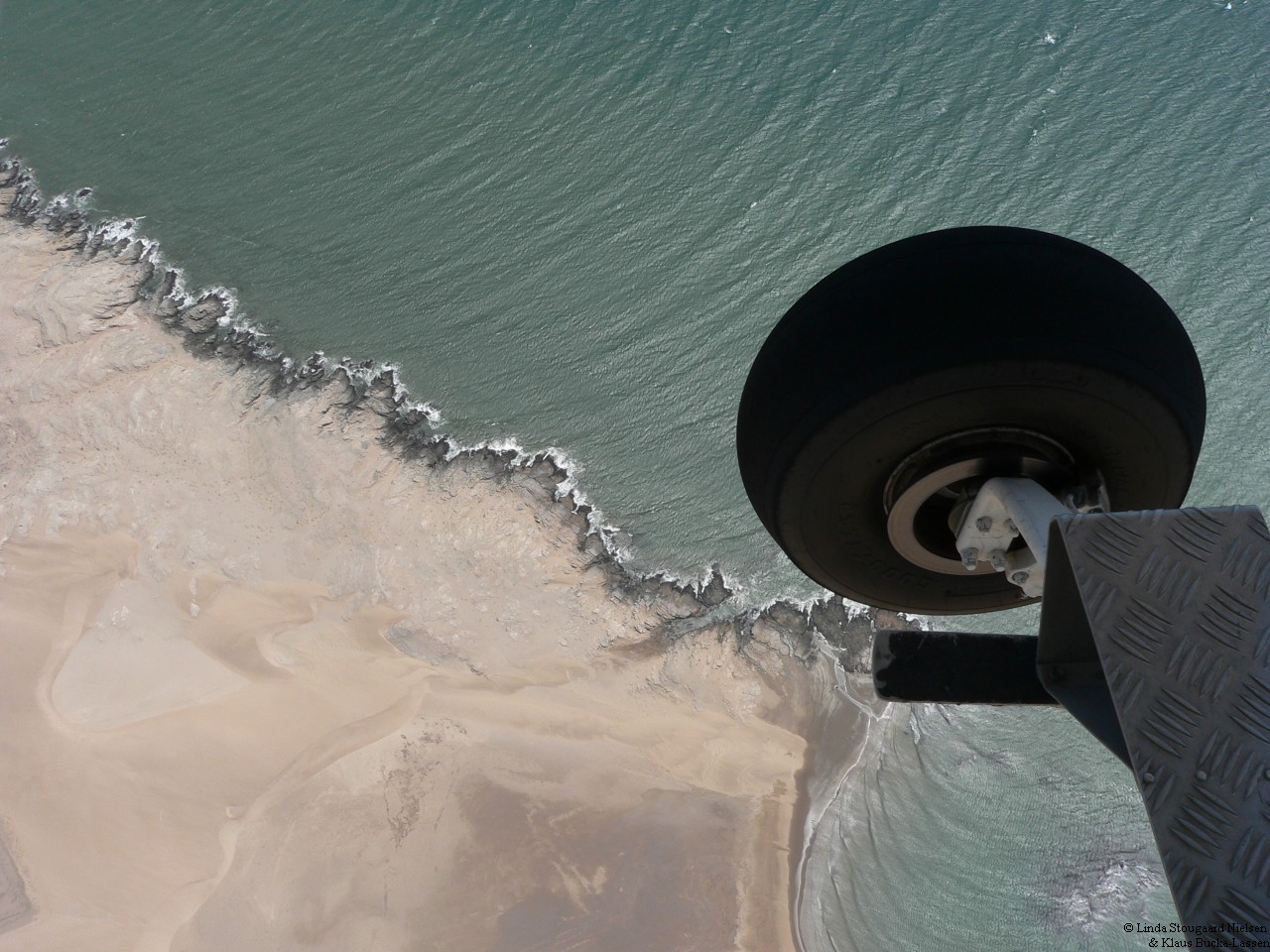
Along the coast
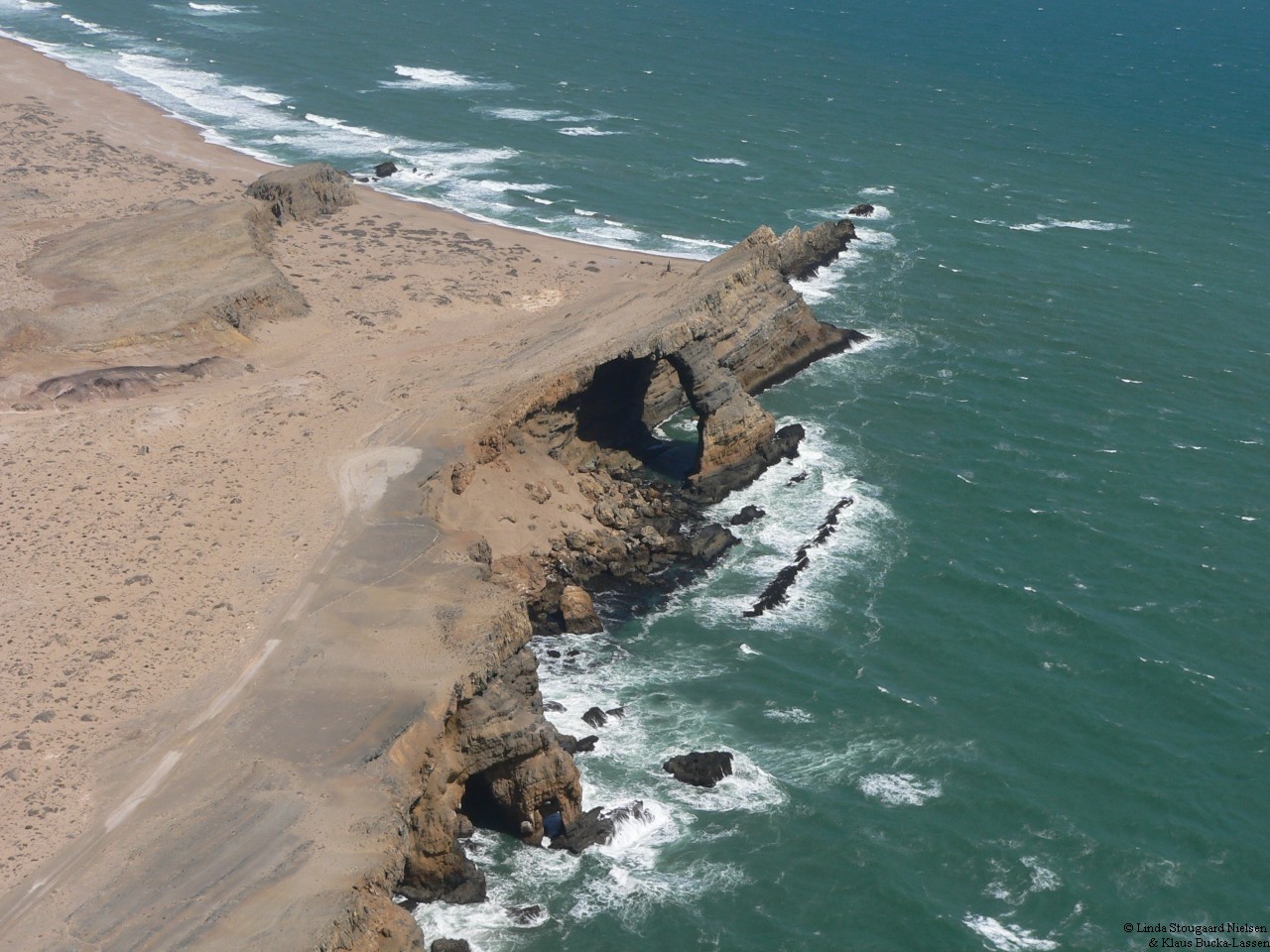
Bogenfels arch
We knew the 'Bogenfels Arch' was south of Luderitz - about 30 miles we guessed, but it could easily be 5 less or 10 more. We kept a really good lookout and did indeed find it (in contrast to some of the shipwrecks we had been looking for earlier) - can't really miss it anyway. I withstood the temptation of flying through it ;-).
Then we tracked straight east which brought us over very remote and beautiful country. The trip from Luderitz to Hobas, an air strip in the north of the Fish River Canyon, took us 2 hours and 10 minutes - without wind it probably had been more like 1 1/2 hours. Still a lot less than the 6 hours it would take you by car though.
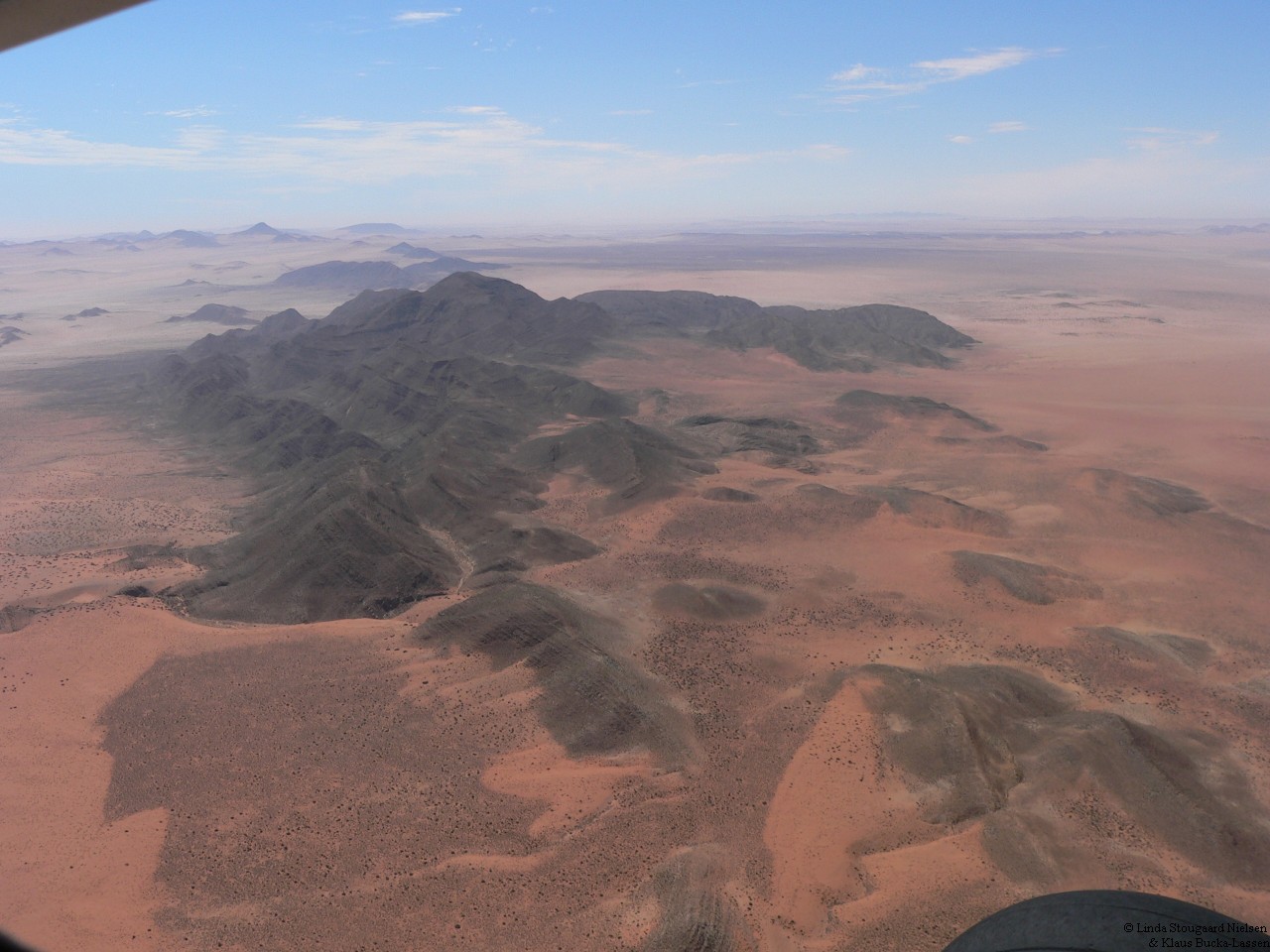
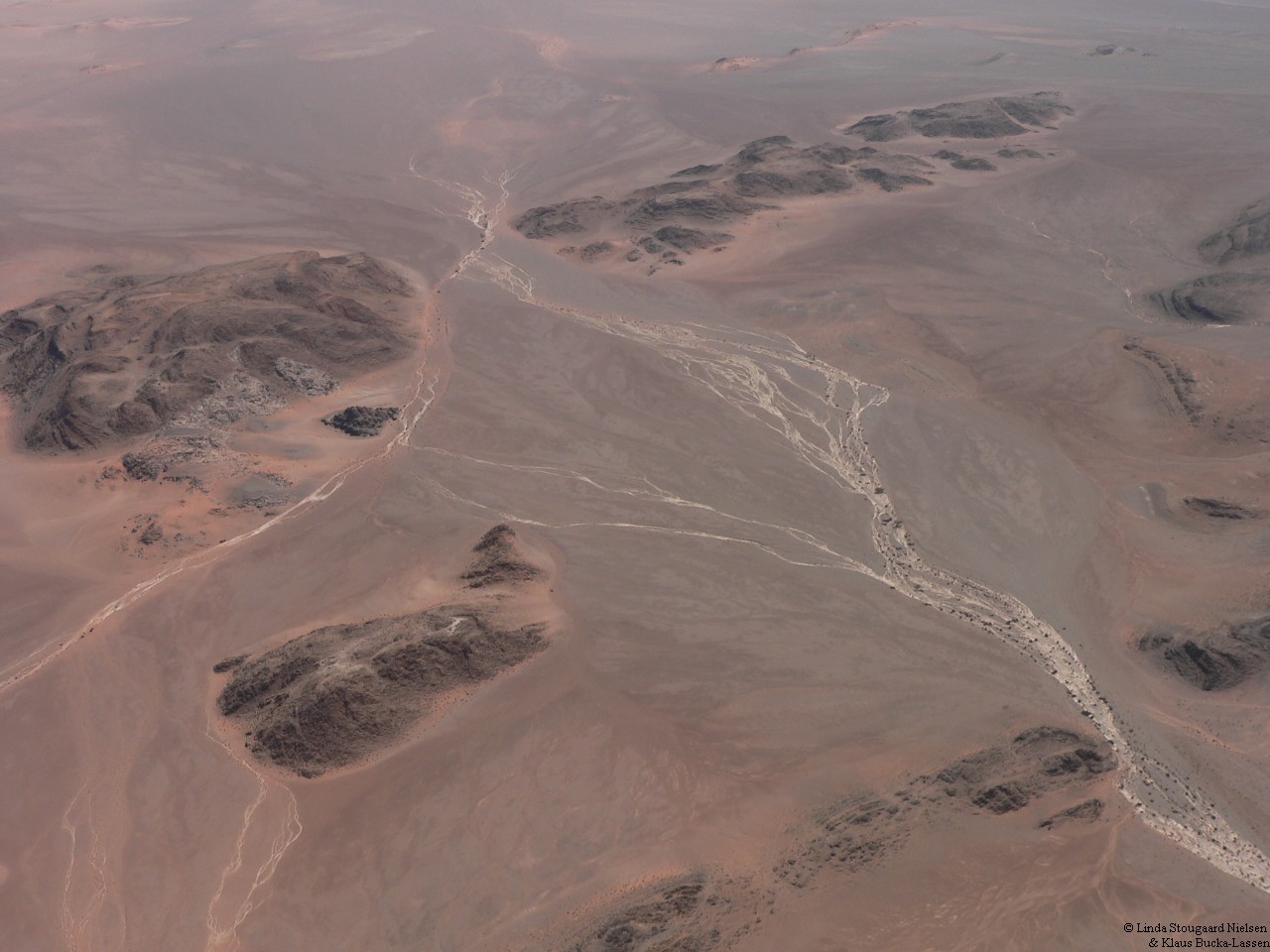
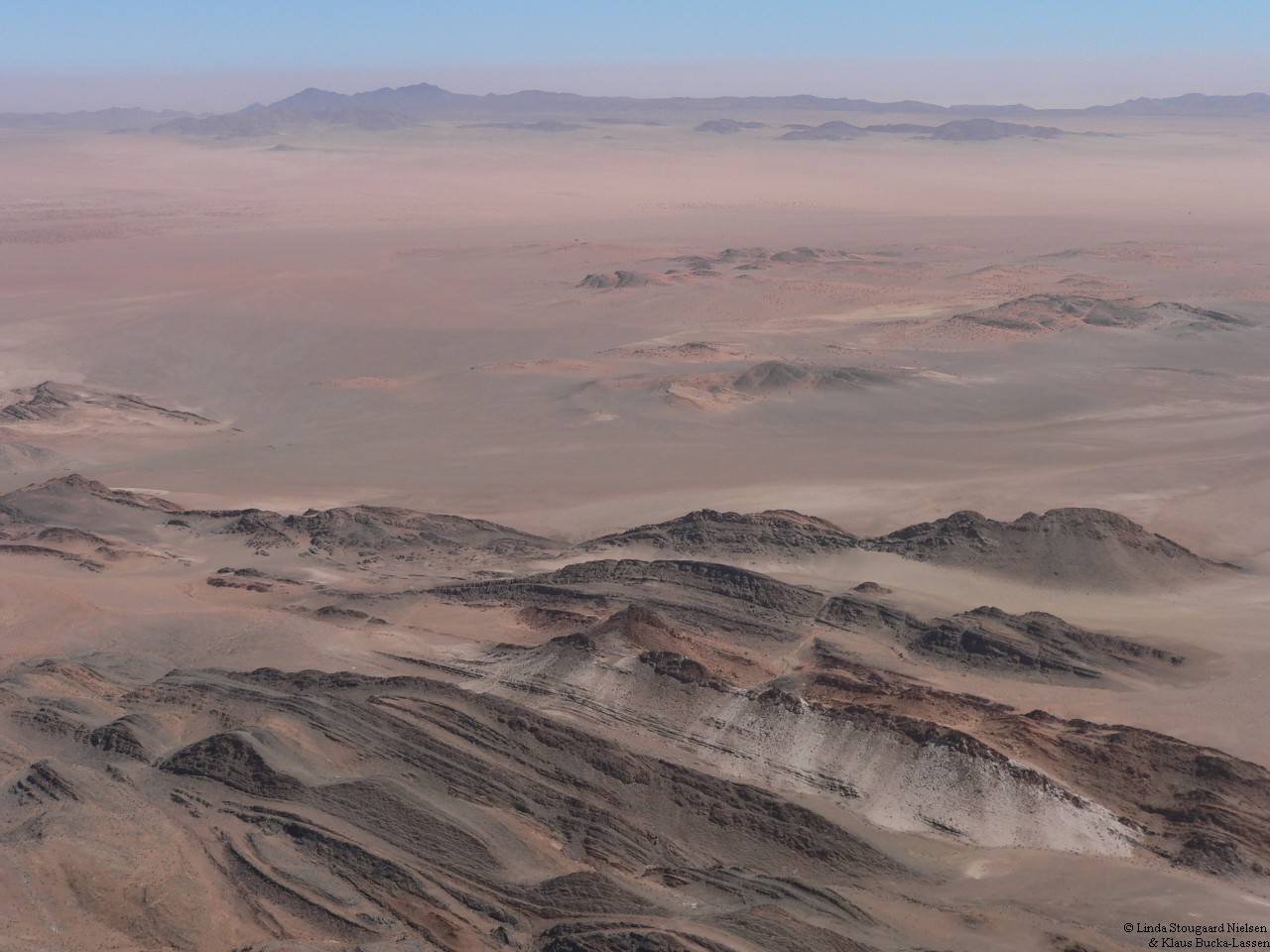
Flying inland over the vast and stunning desert
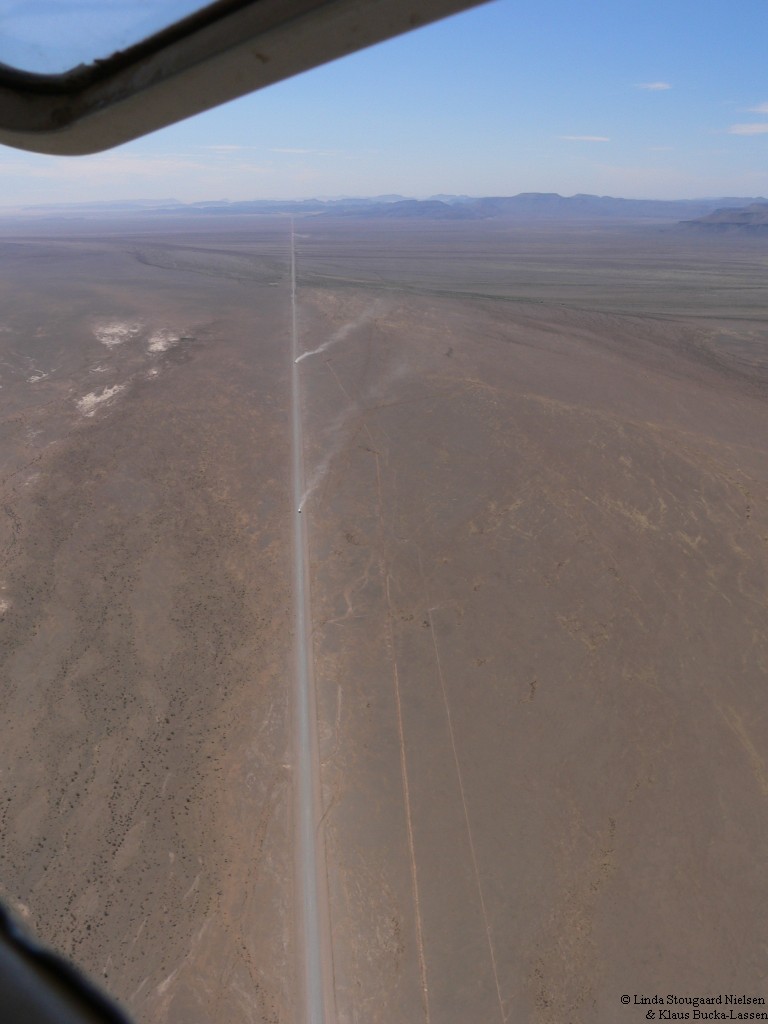
Must be boring ;-)
Before we landed at Hobas we did a bit of scenic flying over the canyon. It really is great to see those kind of places from the air. Wouldn't want to miss that.
The Hobas air strip is only rarely used. The guy from the Hobas Camp Site who picked us up said there only is an airplane landing once every three months or so. Before touching down I did a low fly-by to check out the condition of the strip. It looked fine so down we went. We had forgotten to ask for permission to land, which according to our airfield directory is required, but so far nobody has complained to us.
Hitching to the canyon for sunset wasn't nearly as easy as we had immagined. There was not much trafic and those cars and busses that did pass through were either full or didn't want to take us with them (tour bus where they claimed their insurance didn't allow them to take hitch hikers with them!?!). Finally a bus with only Dutch people in it (surprise surprise) stopped and gave us a lift. Just 2 minutes too late - when we arrived the sun had disappeared behind the horizont already. We get a ride back with the Dutch bus tour again, they were very freindly and offered us even a beer.
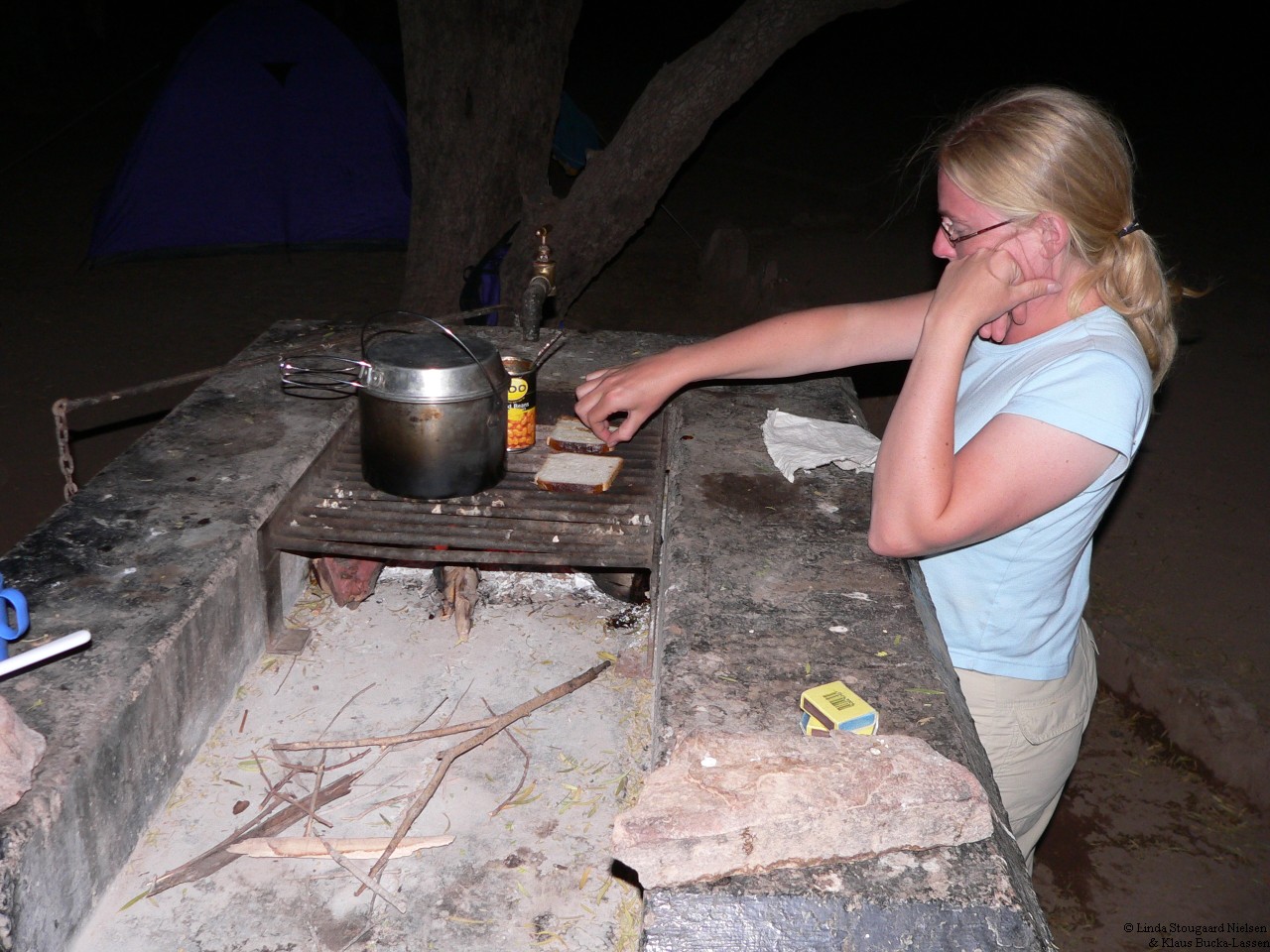
Dinner
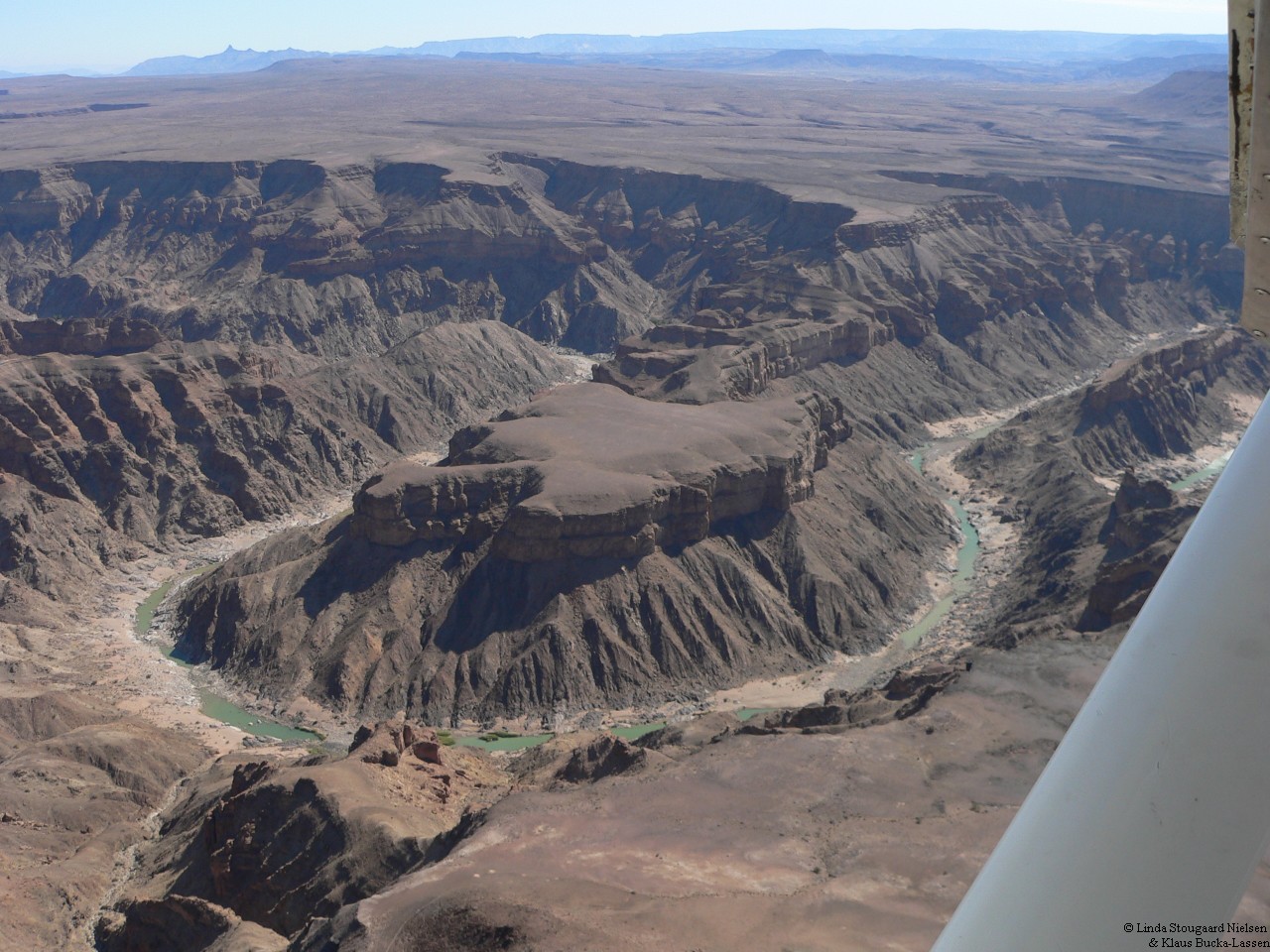
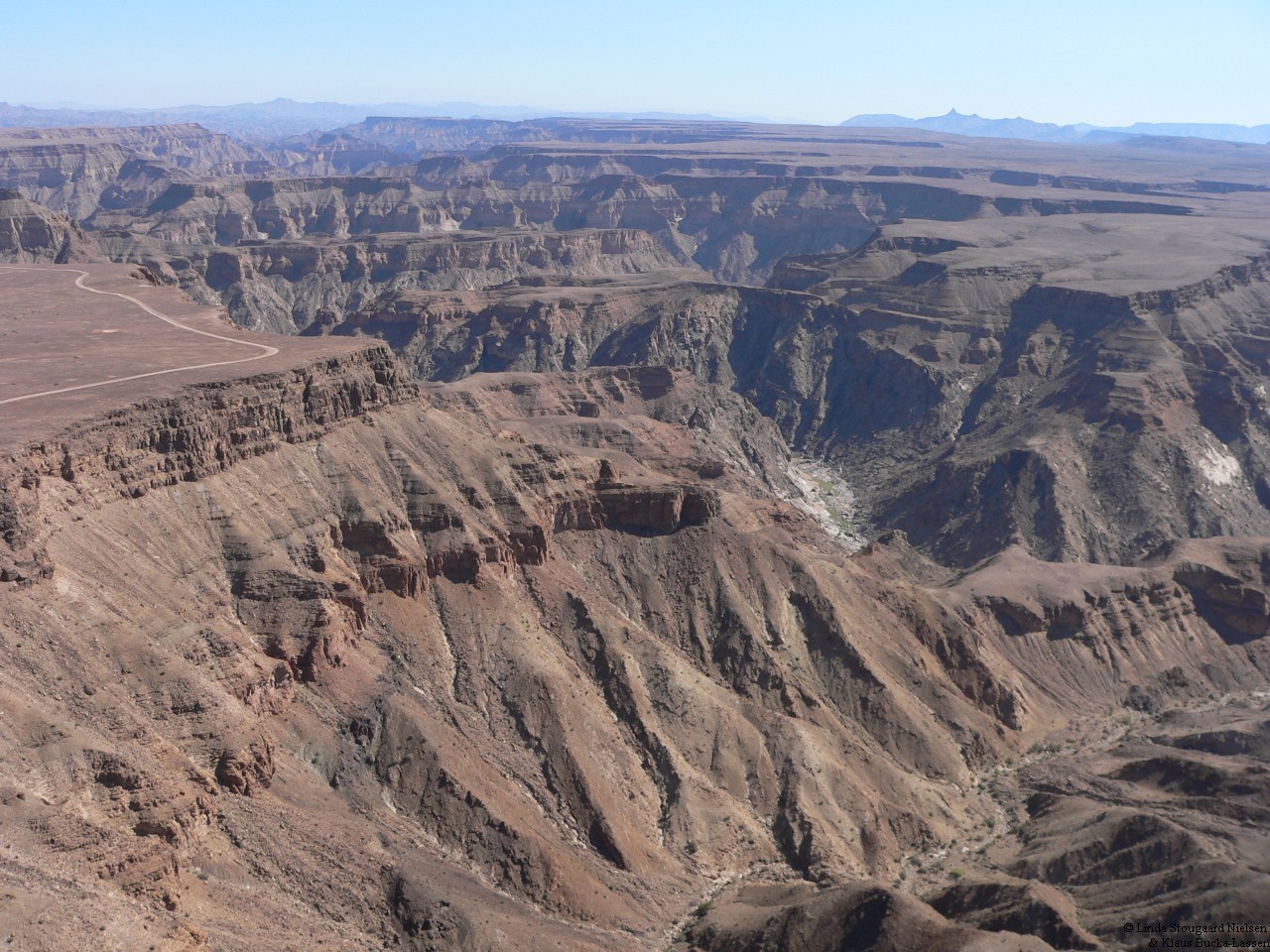
Fishriver Canyon
Back at the camp the baboons had been playing around with our stuff even though we had secured the pot with a heavy stone on top of it - the pot was on the ground and the stone had oviously been aimed at the pot...
Luderitz
Luderitz is actually a quite nice place. I had expected more of a dust- town, but the streets are pretty clean, the houses look nice and even though we were told to be careful and on guard we never really felt uneasy or unsafe.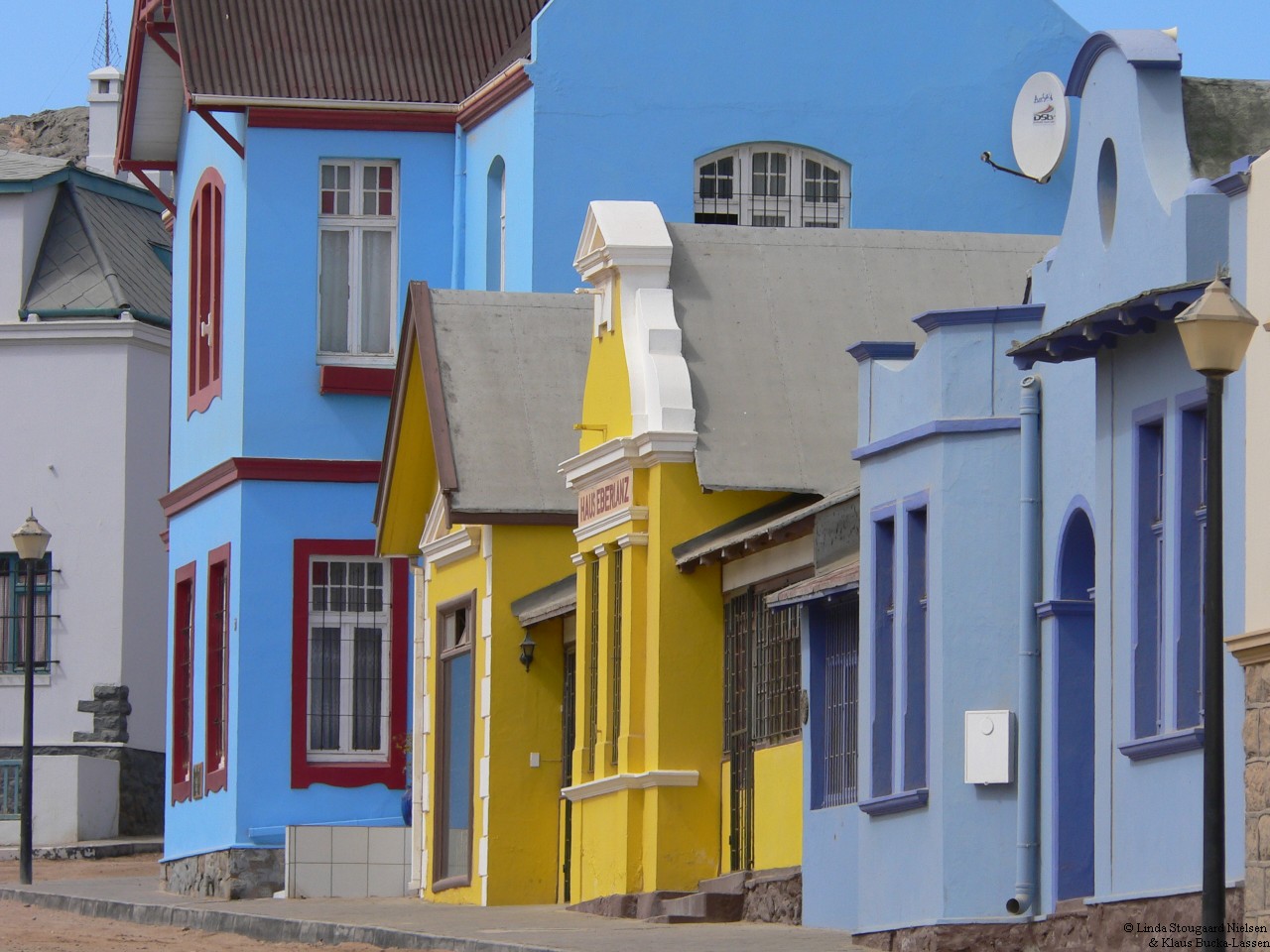
Luderitz
The Kratzplatz where we stayed was friendly and ok value at NAD 320 per night including breakfast.
The boat tour with the Sedina can not really be recommended when the weather is bad. I think they should raise their threshold of when the tour actually will be carried out.
Kolmanskuppe is definitely a worth a detour. Rarely have we met this many friendly people in one tourist spot in Namibia before. The tour takes about an hour and is very very interesting. The 9.30 tour is always more busy than the 11 o'clock one (those are the two only tours due to the wind that usually gets quite strong in the afternoon). In our case there were an estimated 40 people on the first and only Linda and me on the second tour - good for us.
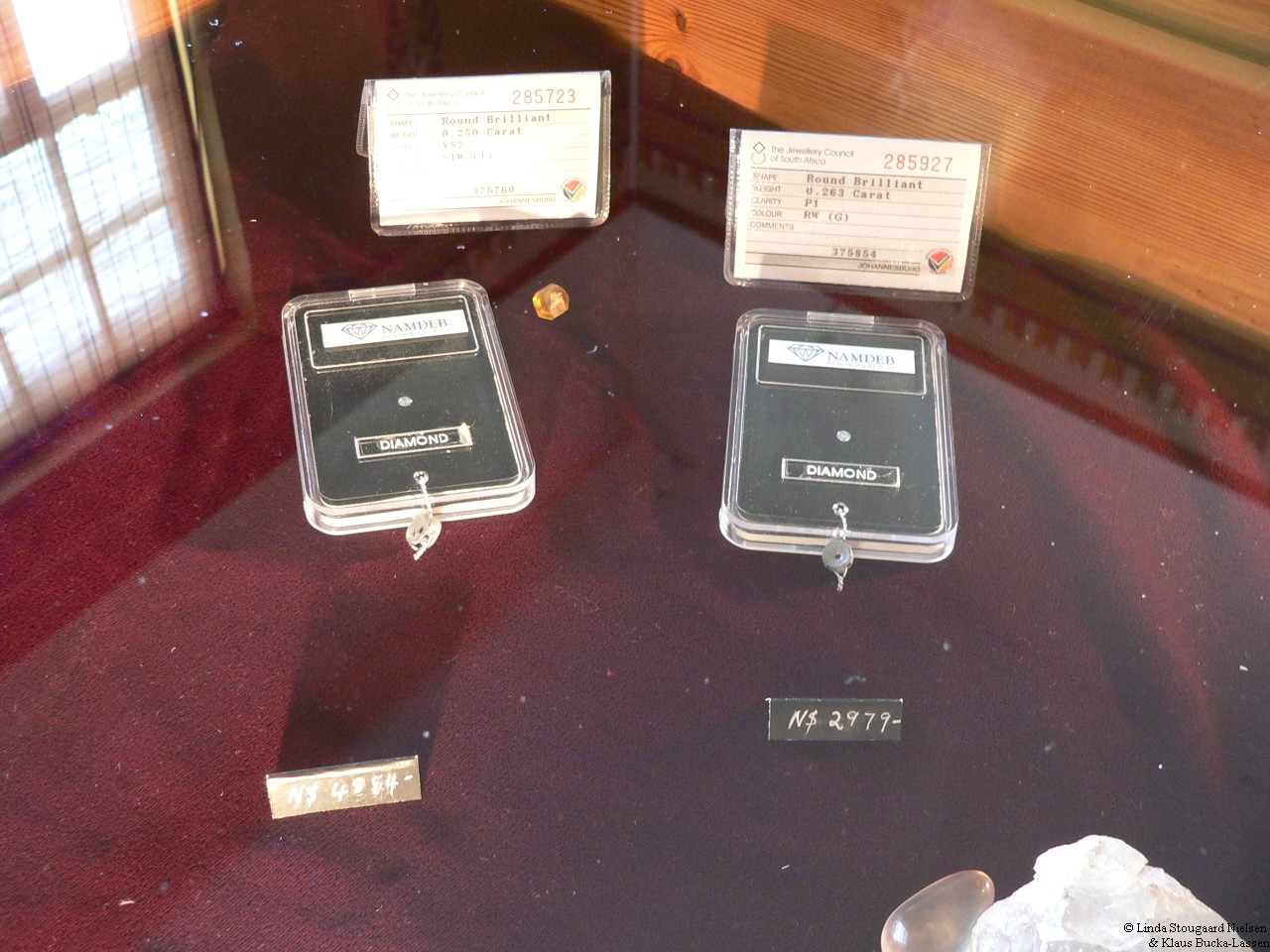
The restaurant inside one of the Kolmanskuppe houses makes great food, coffee, and in particular cakes. The staff is very obliging. Diamonds that range from about NAD 400 to 40.000 are sold next to the souvenir shop. They are said to be cheaper here, because the mining company sells them directly to the customer.
Sperrgebiet
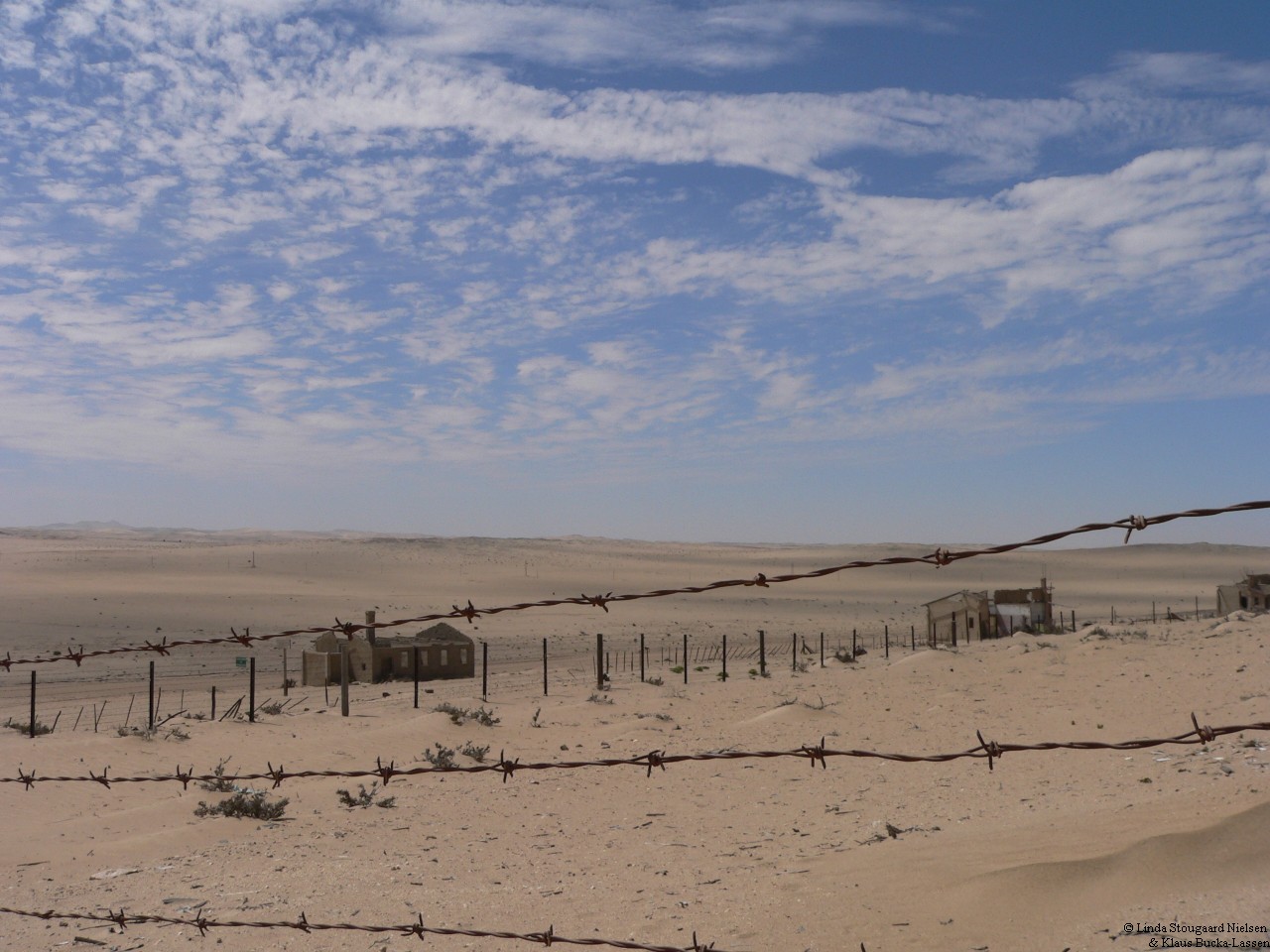
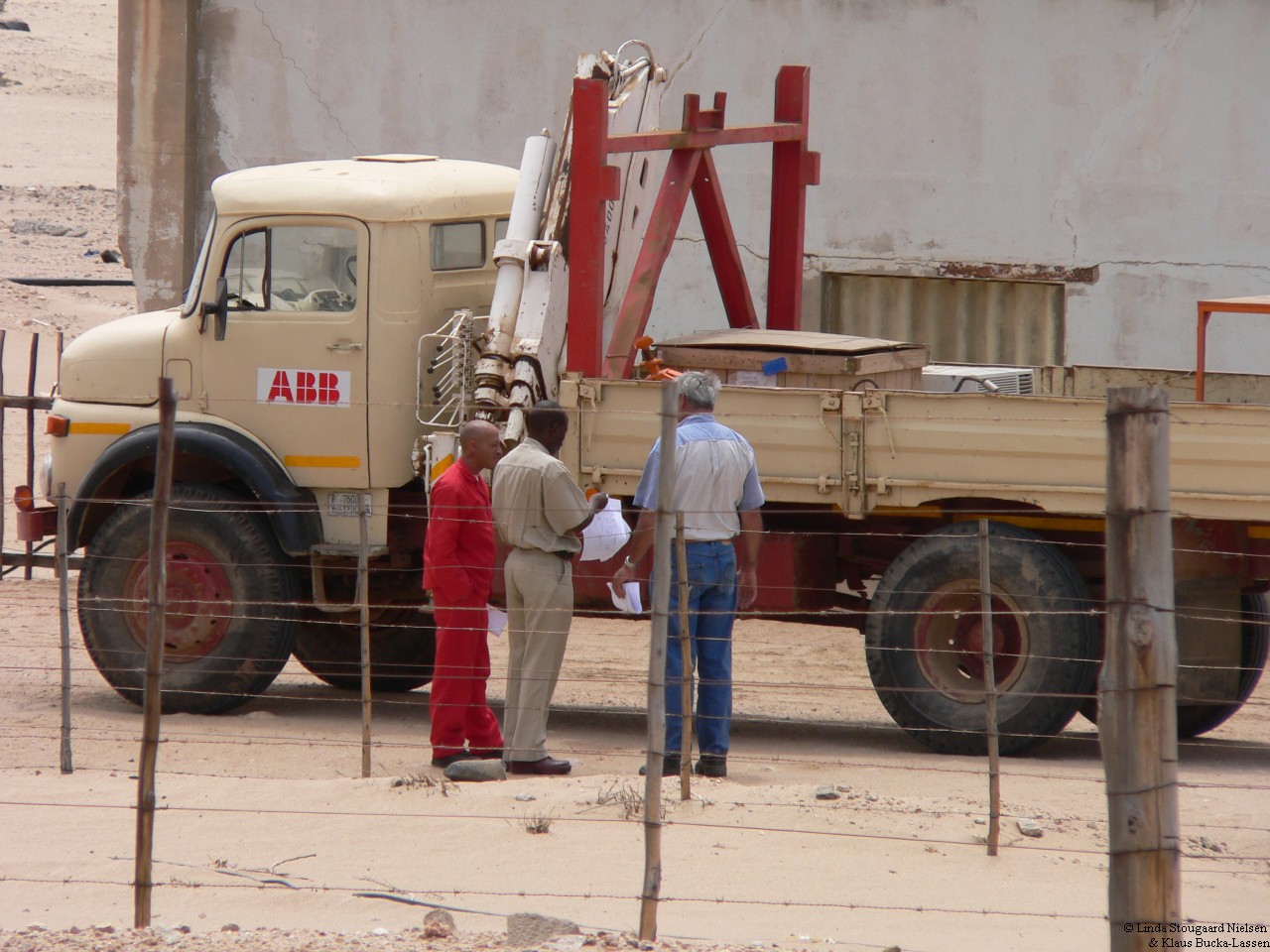
A view into the 'sperrgebit' from Kolmanskuppe
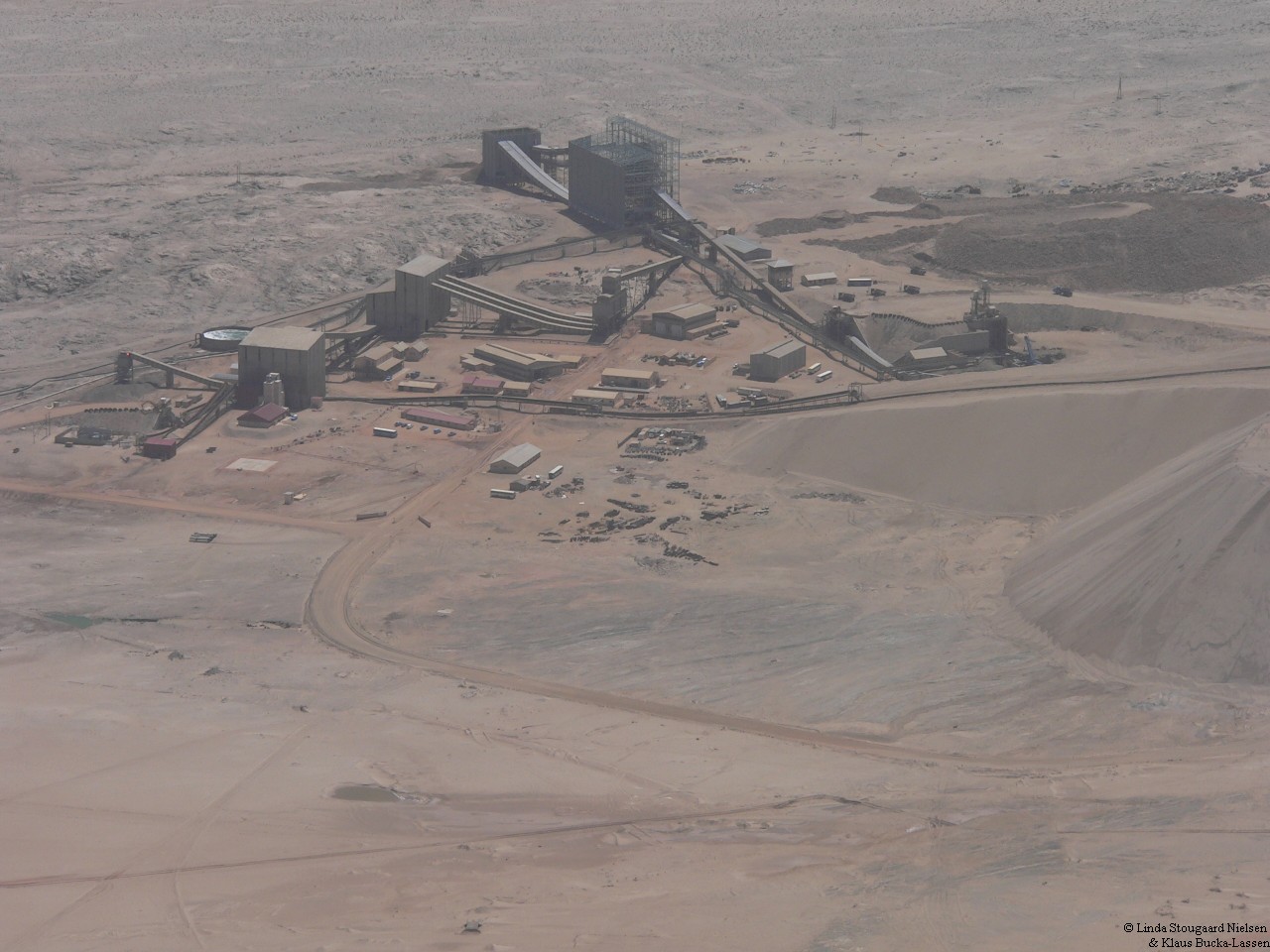
Diamond mine
The wording 'Sperrgebiet' is taken very seriously. A troublesome process is necessary to get a permit to go into the Sperrgebiet by car. Many people have told us that we really have to be careful here. Intruders will not be accepted and will be met by heavily armed guards. Planes however, as long as they don't land, can fly over. Thus, we were able to see some of Namibias scenery that is closed for the normal tourist. Including vast areas of the desert being dug away and filtered for diamonds and vacuum cleaning like ships eating away the sea bottom.
The locals seem mostly to hate the Sperrgebiet, as it isolates them and reduces their tourism possibilities heavily. Apparently there had been talks about lifting some of the restrictions because there shouldn't really be any diamonds left. But in recent years new ways of mining for diamonds have been developed such that the companies will start all over with "combing" the entire area. The Sperrgebiet probably is going to be reality for many years to come.