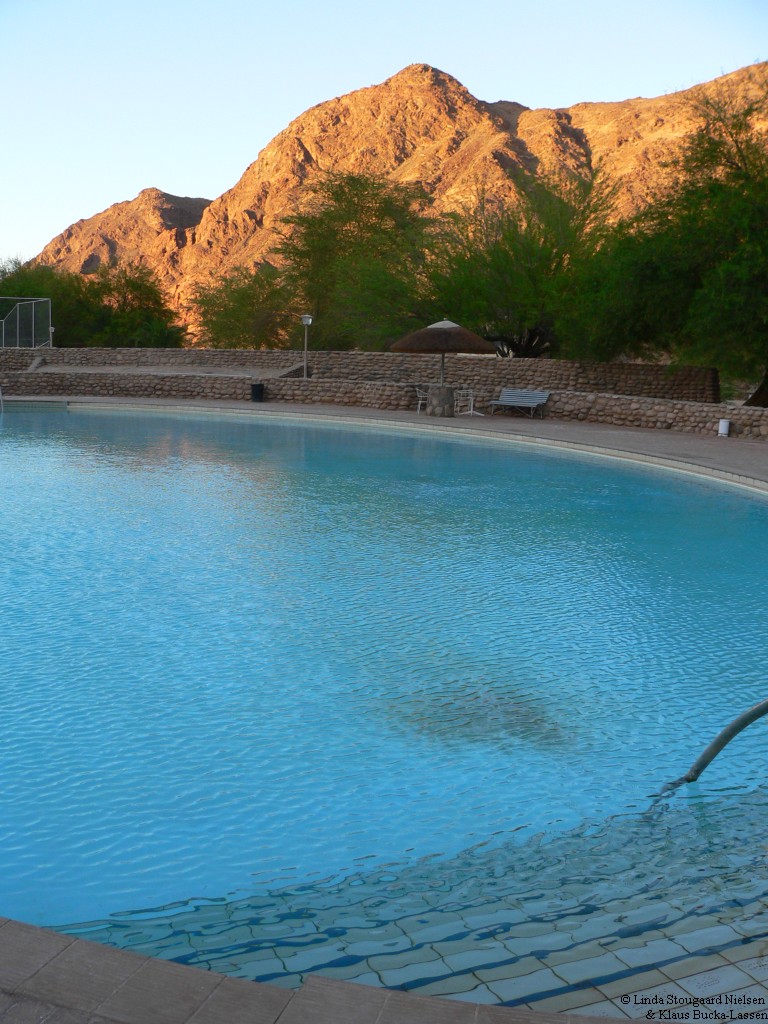
Ai-Ais hot spring
After breakfast at the restaurant, which was acceptable, but nothing special at all (apart from the birds flying inside and pretty much eating directly of our plates :-), we got driven back to the air strip. The flight to Cape Town wasn't going to be trivial - not because of the distance, the weather or anything like that, but mainly because of the annoying customs rules they have between Namibia and South Africa (and most other countries in the world). We had studied our options many times in the previous weeks - even before we had left Switzerland - because we knew it was going to be a problem. The conclusion at this point was that we had three options on how to continue.
- Of the completely legal ways to get to Cape Town, the most practical for us would have been to get the outgoing customs done at Keetmanshoop and then clear the South African customs at Upington before proceeding to Cape Town. However, this would be a considerable detour and far away from the coast where we preferred to go. Also the stretch from Upington to Cape Town is said to be pretty boring. Not particularily appealing.
- A little less legal but still considerable option would have been to do the customs and refuel at Keetmanshoop. Then fly more or less directly to Cape Town with one unscheduled stop along the way at some unmanned air field in order to refuel from the jerry cans.
- The easiest option was to go directly to Oranjemund to do the outgoing customs there. The only problem was that there is no customs airport in South Africa between Oranjemund and Cape Town such that refuelling half-ways would have been illegal. Oranjemund didn't have fuel. Without a strong tail wind it wouldn't have been possible for us to get to Cape Town. It's really annoying that the South Africans have closed down the customs at Alexandertown, which is just on the other side of the border of Oranjemund.
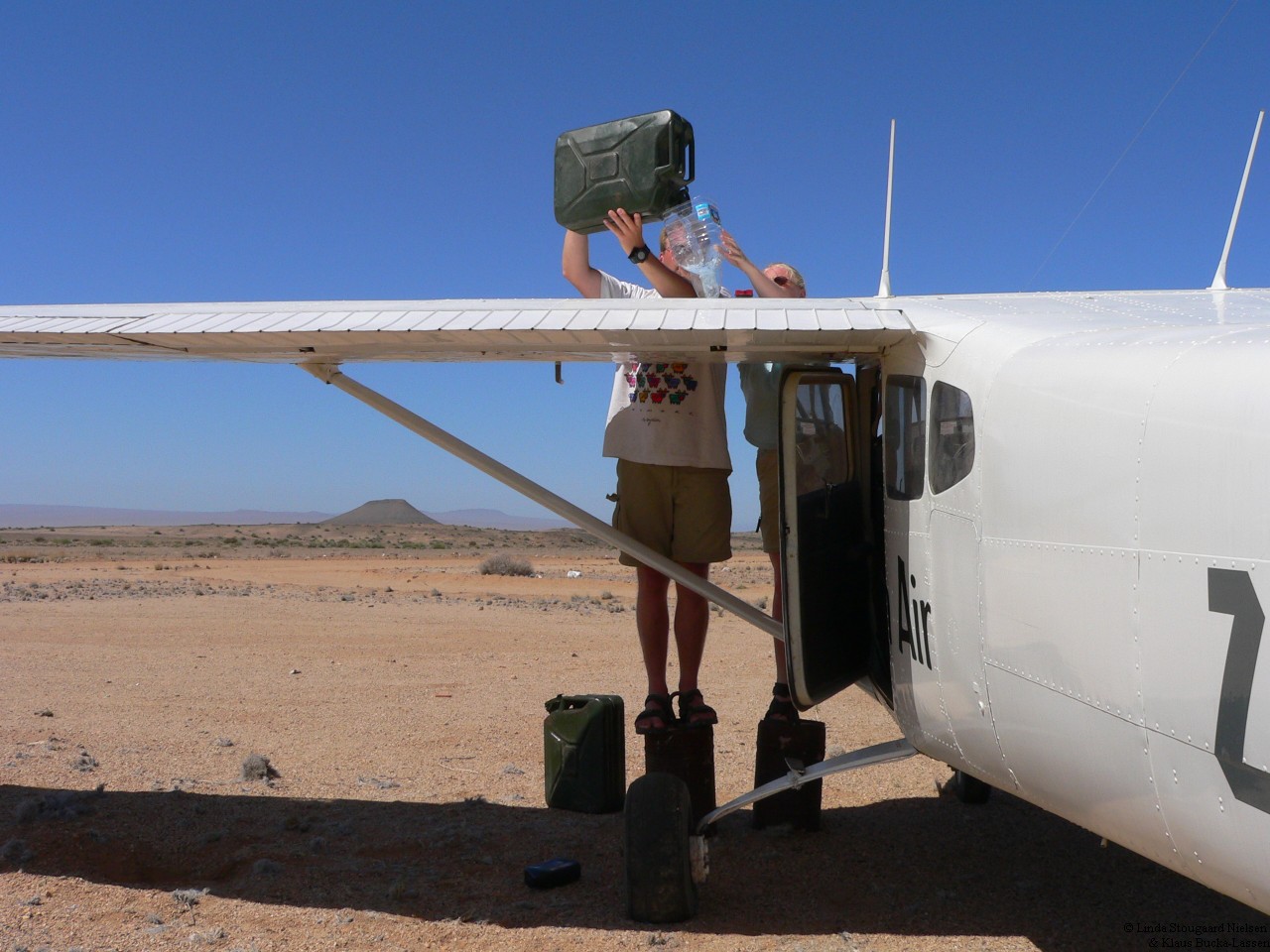
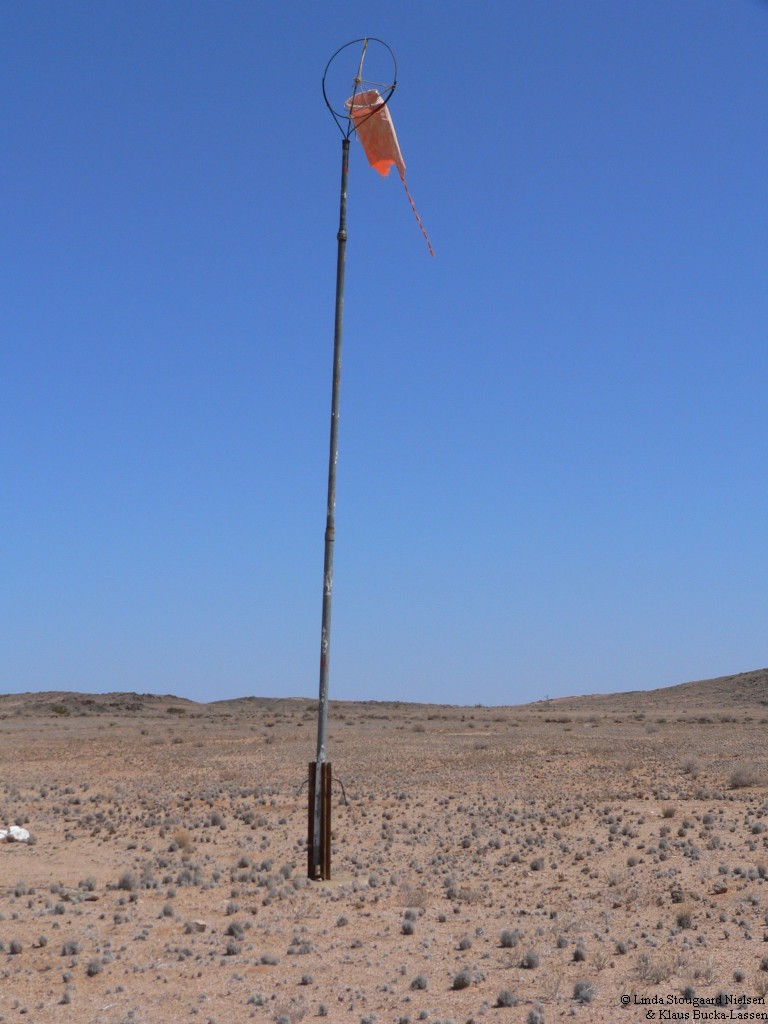
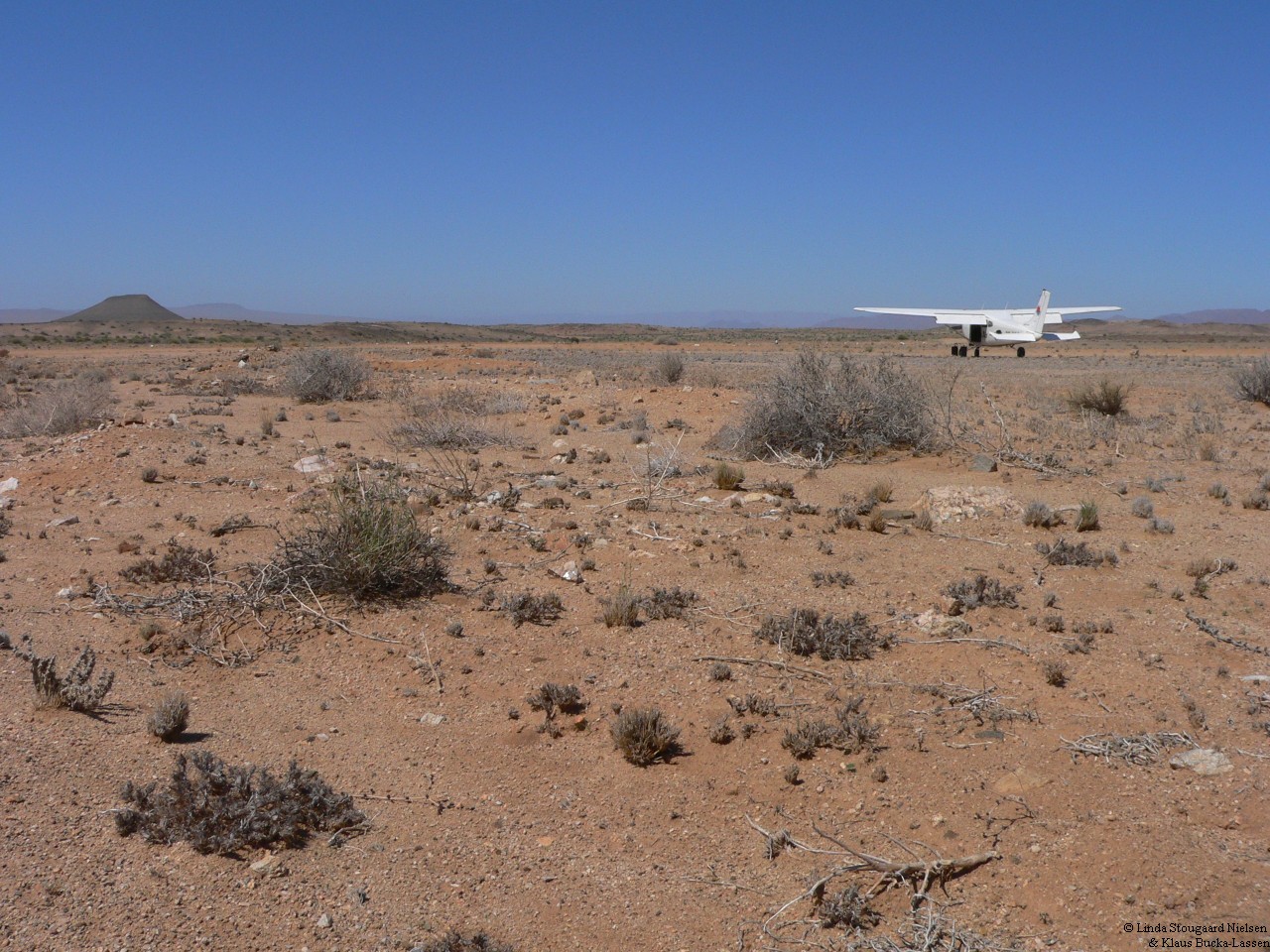
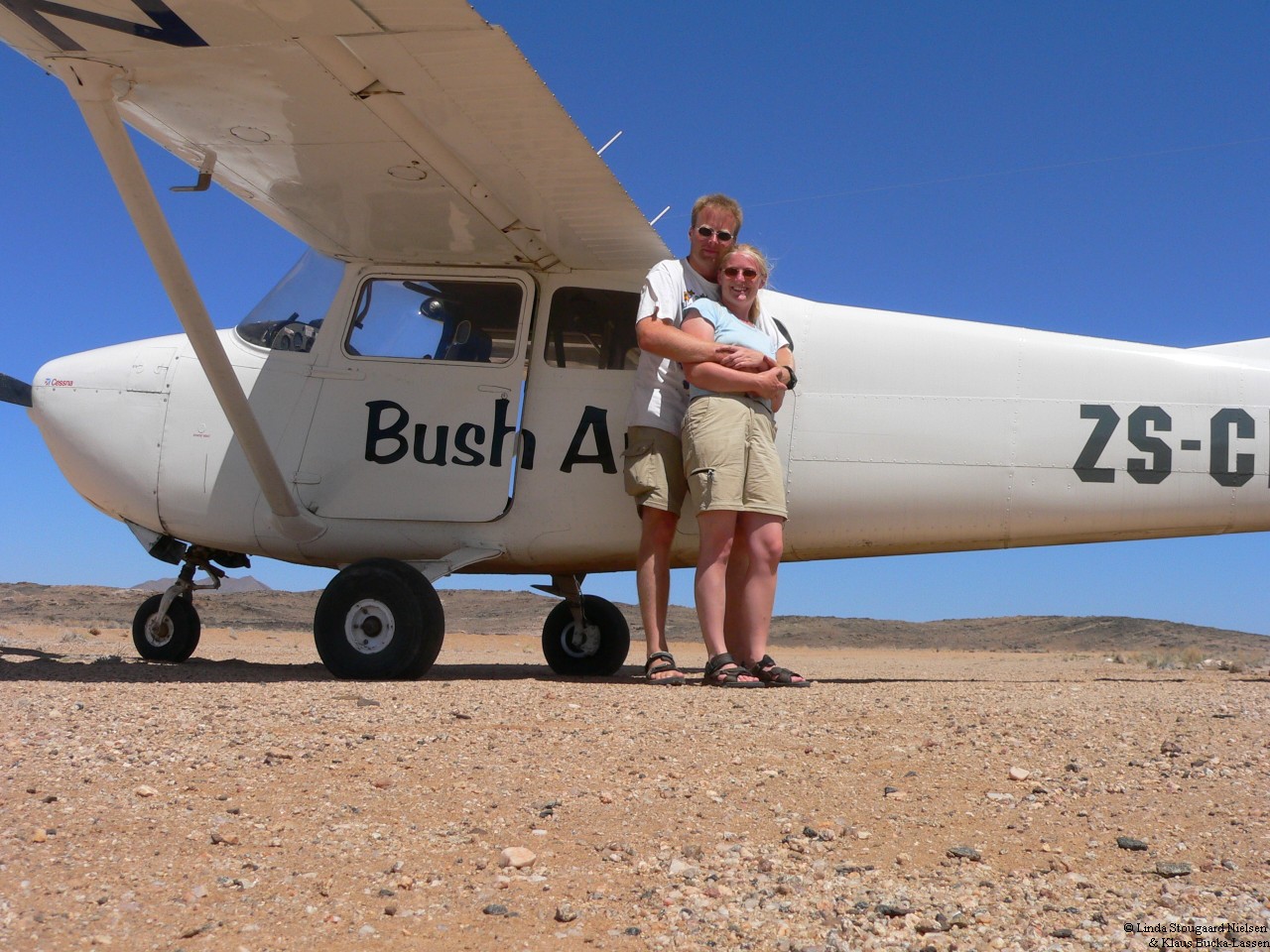
Getting ready at the Ai-Ais landing strip
With that option we also had no use for the jerry cans anymore so we filled out tanks before taking of from Ai-Ais.
The flight along the Oranje river and over the Richtersveld NP was nice. Oranjemund is a bit weird. To land you need prior permission and to enter the town you furthermore need a police permit! Obviously because of the diamonds.
If the customs had forgotten us or if it was because we arrived about an hour later than announced I don't know, but they weren't at the airport when we arrived and had to be called in. Hence we were stuck at the airport for almost two hours. Just time enough for the airport officer to organise the correct change (yes, little things like this can cost quite some time). I also got some quite valuable tips on how to fly into Cape Town from a chopper pilot who had grown up in South Africas allegedly nicest city.
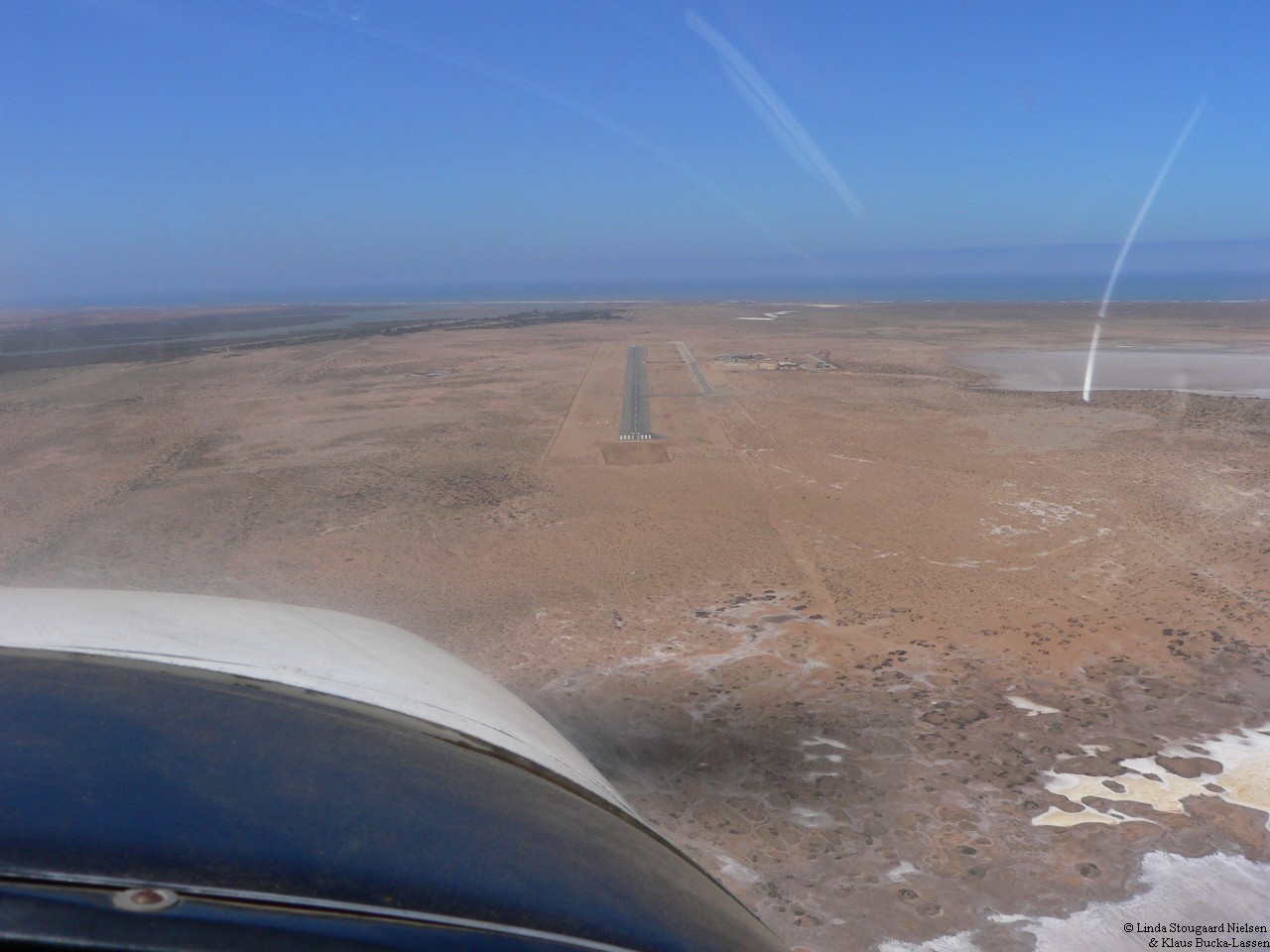
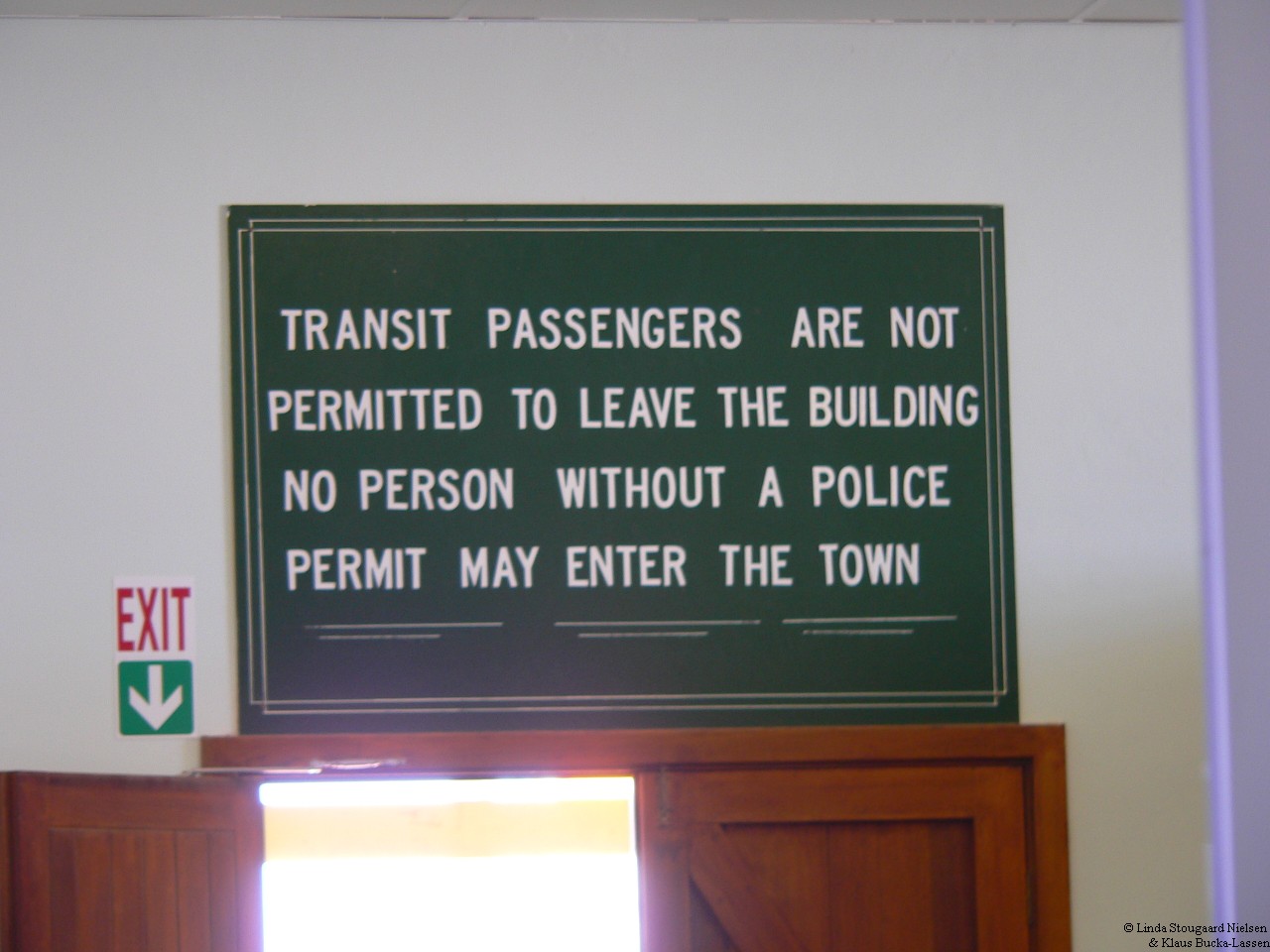
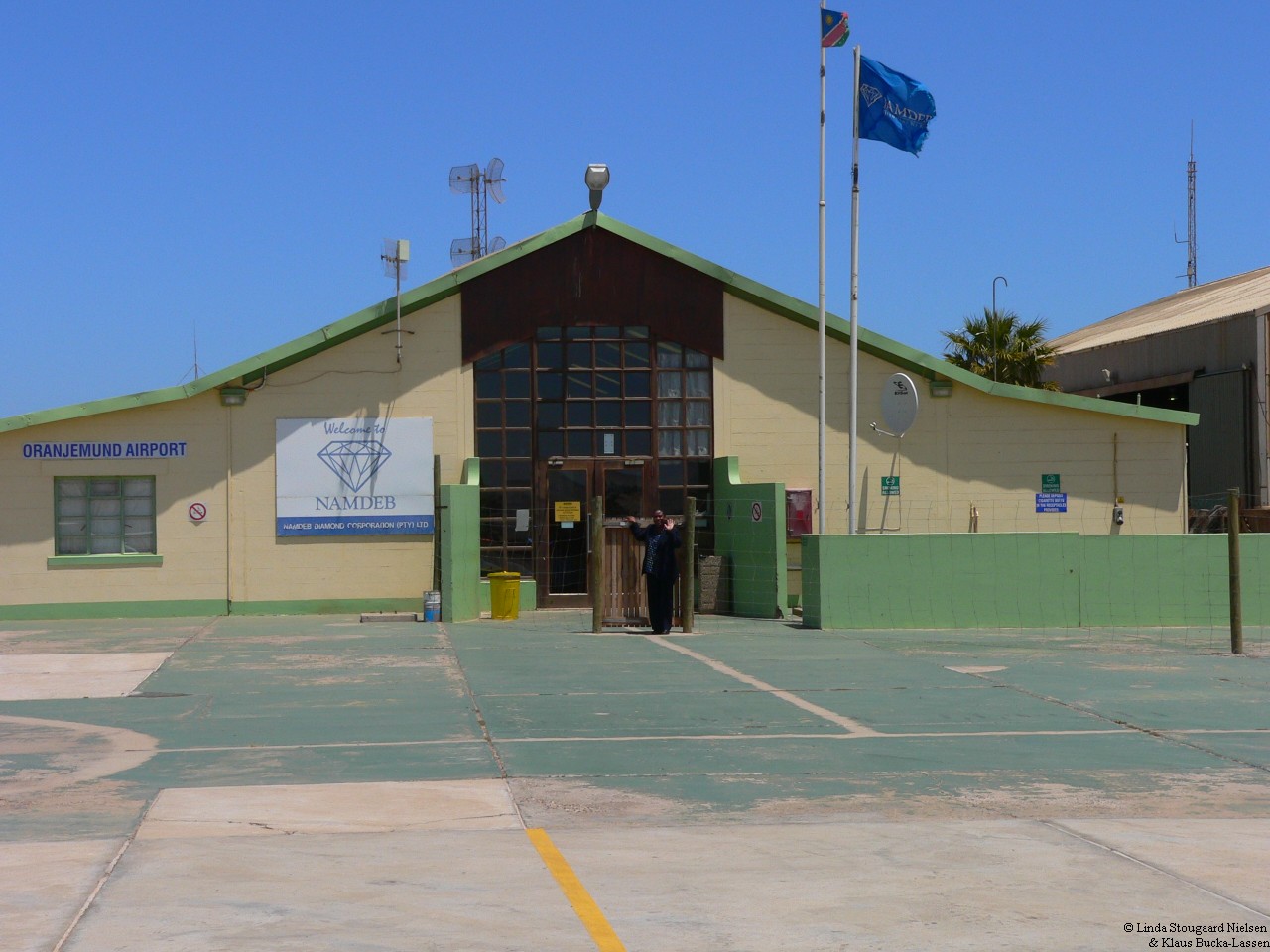
Clearing customs at Oranjemund - a diamond port
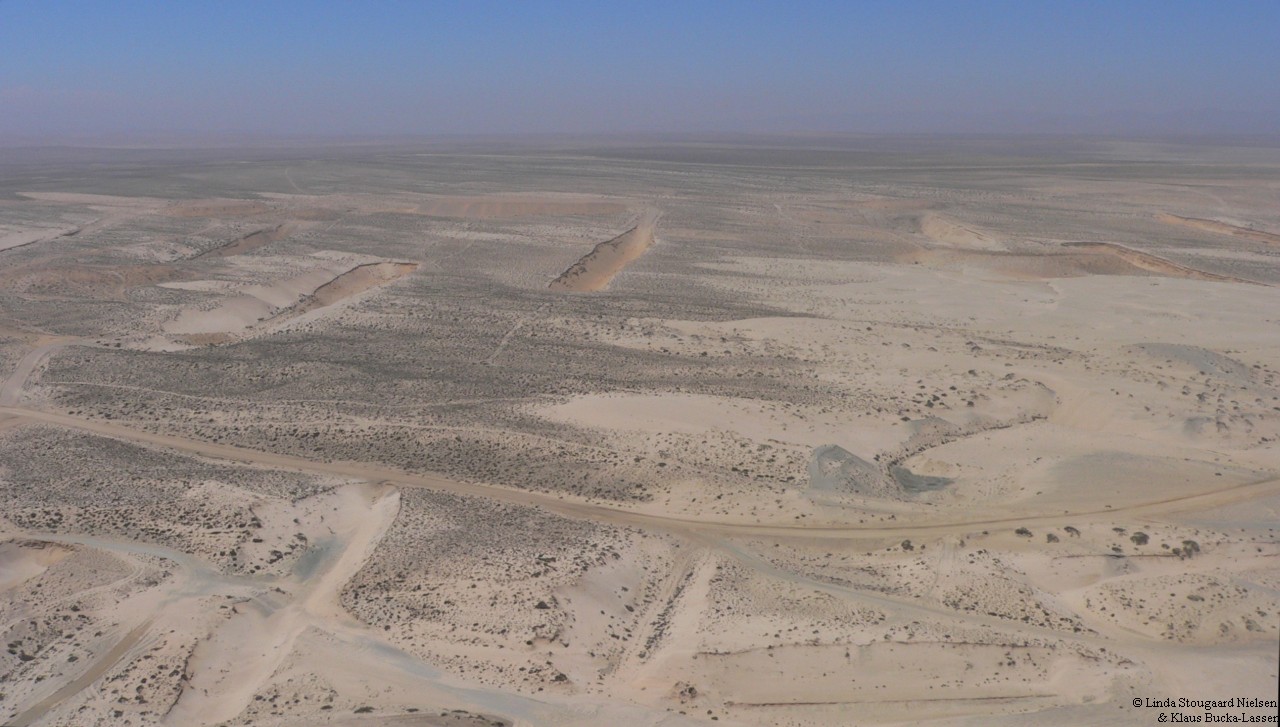
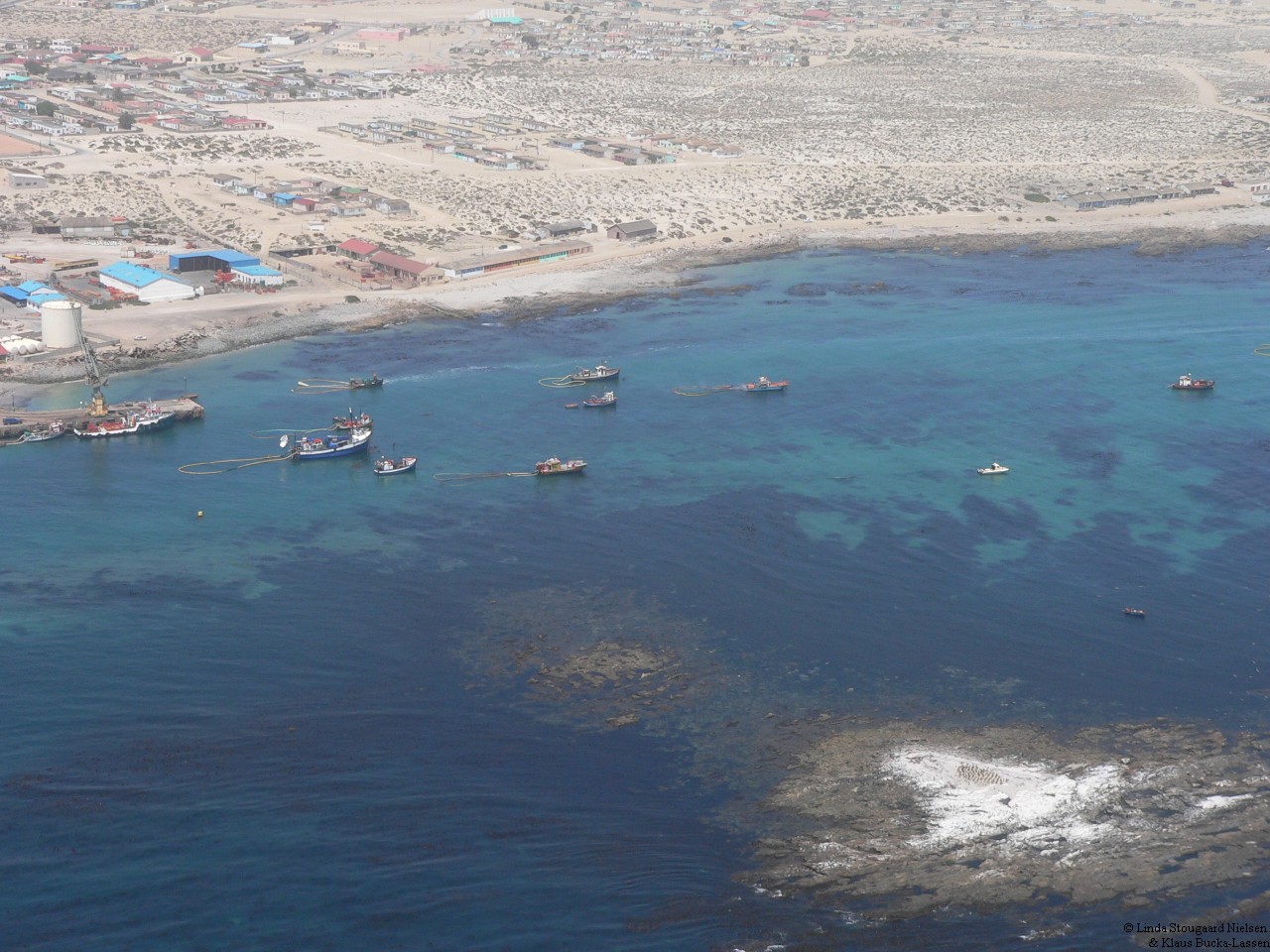
Diamond extraction
The coast was clear of clouds, but unfortunately the head wind was very strong. There was no way we could make it to Cape Town without refuelling. We would have to refuel at Springbok. On the way south along the shore we saw lot's of diamond mining activity and another ship wreck.
Springbok is perfect for the kind of a stop we were doing. Except for the refueller there was nobody else. The place was completely dead. Charlie Romeo Oscar got some of his favourite fluid and of we went again.
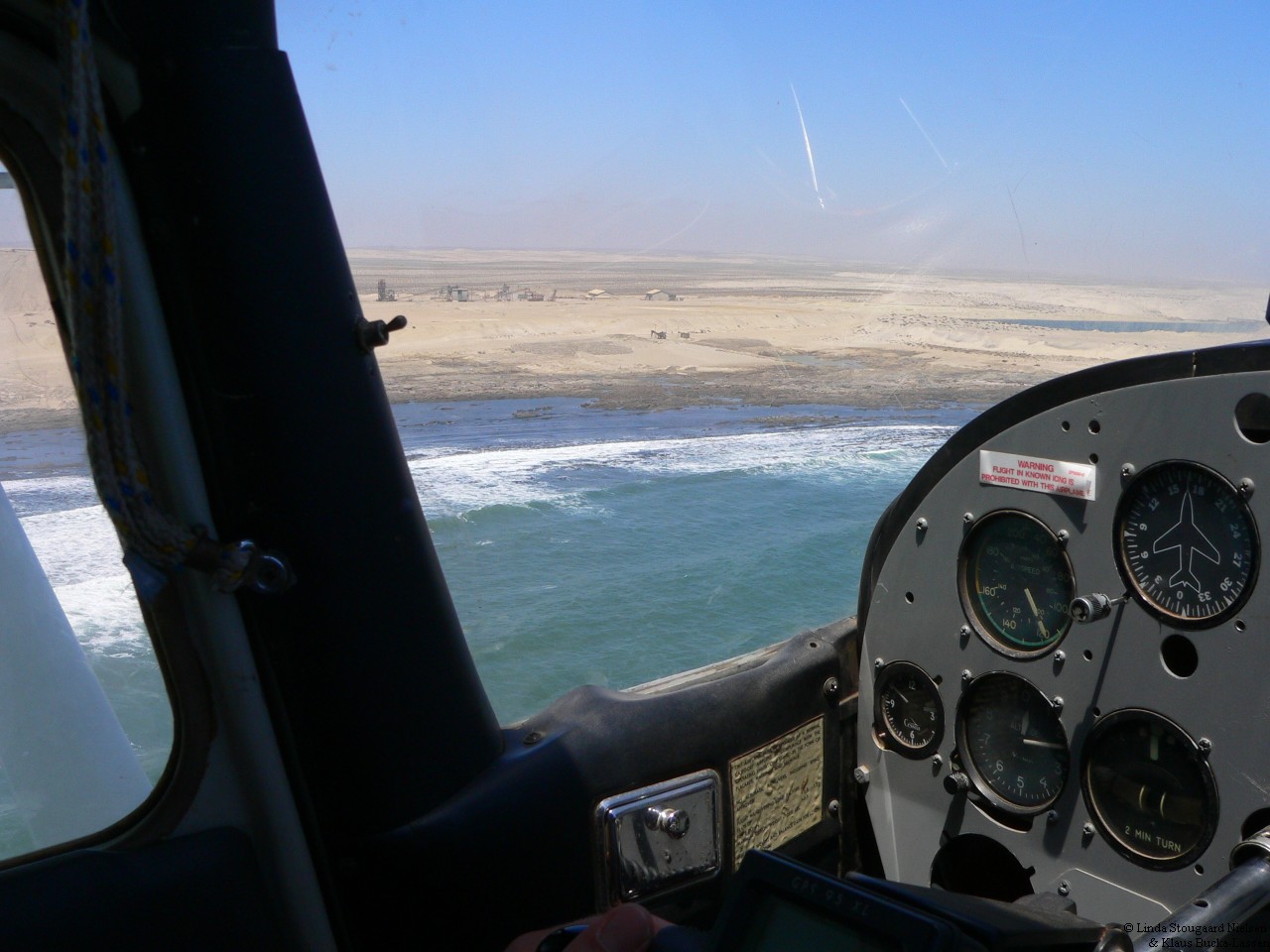
Are we in a boat?
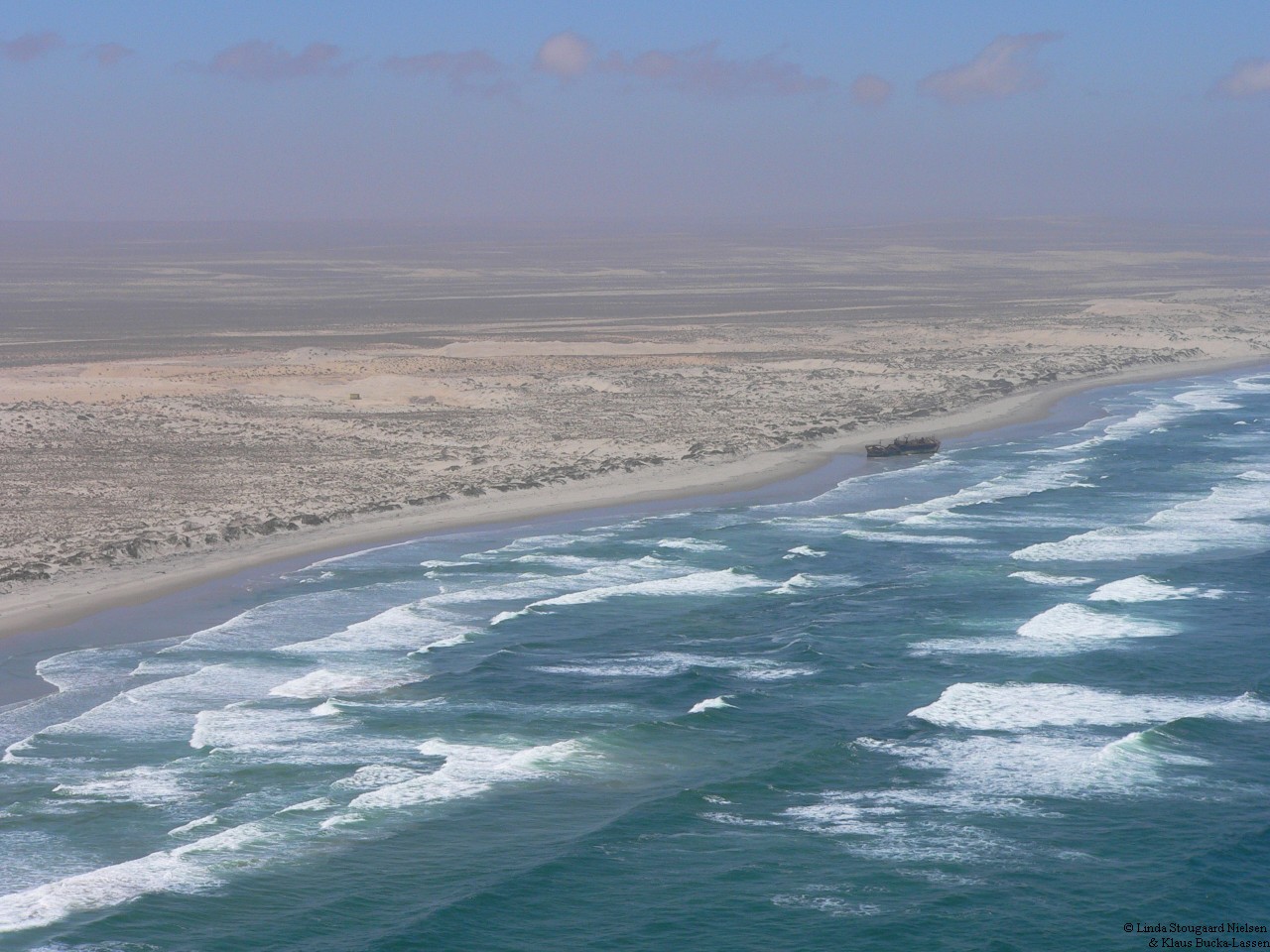
Wreck
We stayed a bit inland at first. Near the Olifants river we wanted to go back out to the coast, but couldn't because of to many low clouds. A bit further south it luckily cleared up again.
Langebaan was a bit confused when I told them that I was coming from Springbok. They couldn't find my flight plan in their system because it was filed under the departuring airport Oranjemund. Finally they sorted it out and guided me through their airspace. The same trouble, just worse, started again when I finally got Cape Town on the radio. I don't think they ever figured out what exactly had happended and that we in reality had done something slightly illegal - probably a very good thing ;-).
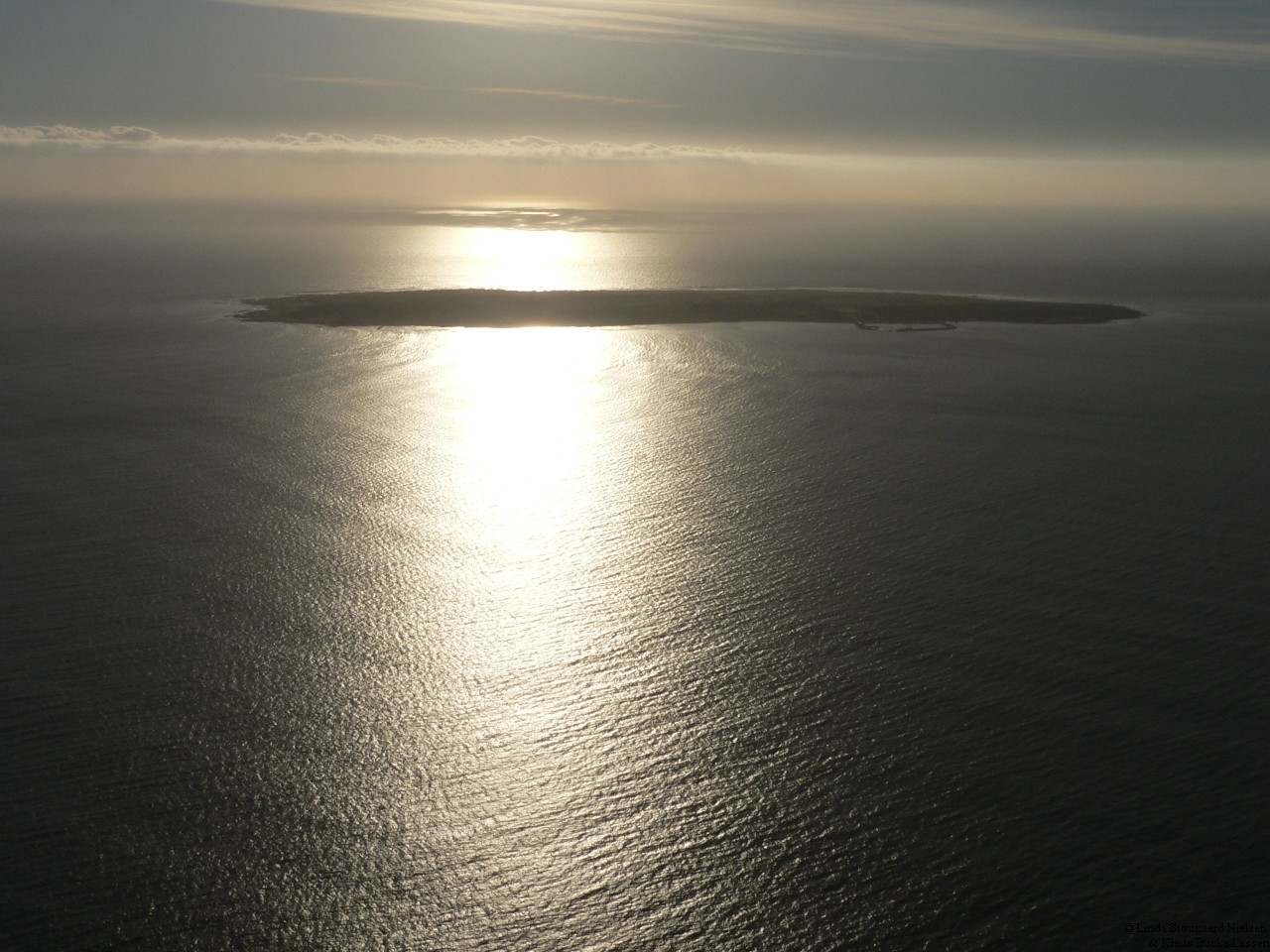
Robben Island
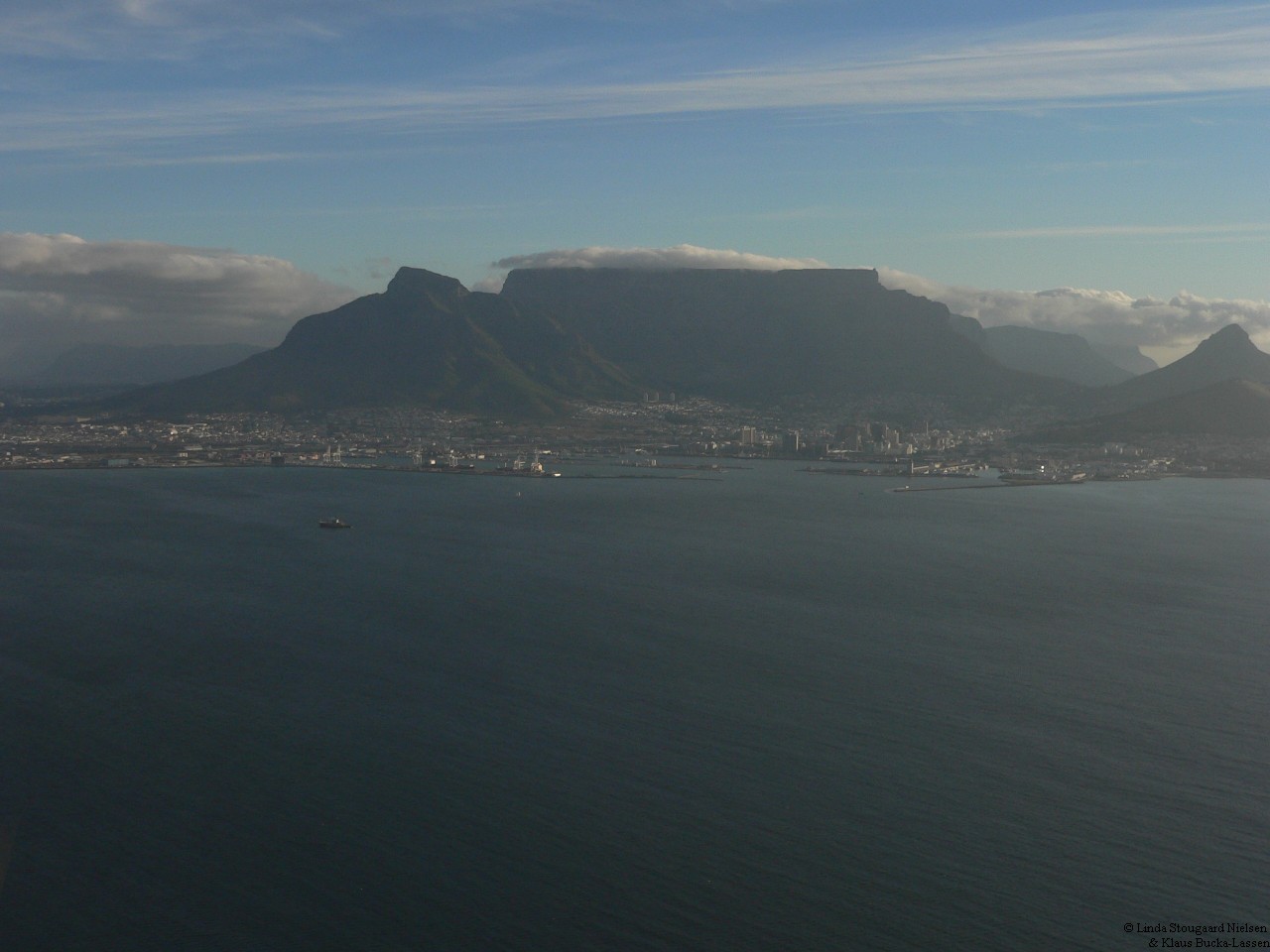
Approaching Cape Town
I am not impressed with the handling of small aircrafts at Cape Town International Airport. The air traffic controllers where nice, but I did have to remind them a couple of times that I was unfamiliar with the area.
I think this is only the second time ever, that I have been put on hold for landing. I was asked to orbit west of the circuit for about 15 or 20 minutes before I finally got allowed to join for runway 22. It is always fun to see a big jet waiting at the holding point for your landing. This tiny little Cessna 182 coming in at approx. 70 knots to touch down on the huge runway and stopping all other traffic for a few minutes.
I told the Apron Control on 122.65 that we wanted to refuel, pay landing fees, do customs, and park for 3 or 4 nights. They suggested to taxi to A4 for customs first. So we did.
We brought CRO to a stop just next to a British Airways 747 jet.
None of the desks in the immigration hall were occupied. Besides the two of us there was not a single soul in the huge hall whatsoever. It took us about 15 minutes before we finally had found an immigration officer. They don't seem to handle private flights here often - it took about 45 minutes to find the right immigration forms. The customs people were also a bit confused about the two of us who appeared out of nowehere, but at least that process went a whole lot faster than immigration did.
Getting back onto the apron was not trivial. We went back to the immigration hall where we had entered the terminal. When we got close to the exiting doors a woman came running and asked what we wanted. We explained that we wanted back to our little plane standing just outside. She looked at us and asked "So, where is the pilot?". "I'm the pilot!" I responded. "You?" she said with disbelief. "But you look like a passenger!". Had I worn a shirt with stripes on the shoulders and possibly a captains hat we would have been ok, but this way, and without reflective jackets - no way, she wouldn't let us out. Instead she called a collegue who would come to pick us up in his little car about 10 minutes later just to drive us about 200 meters to our plane.
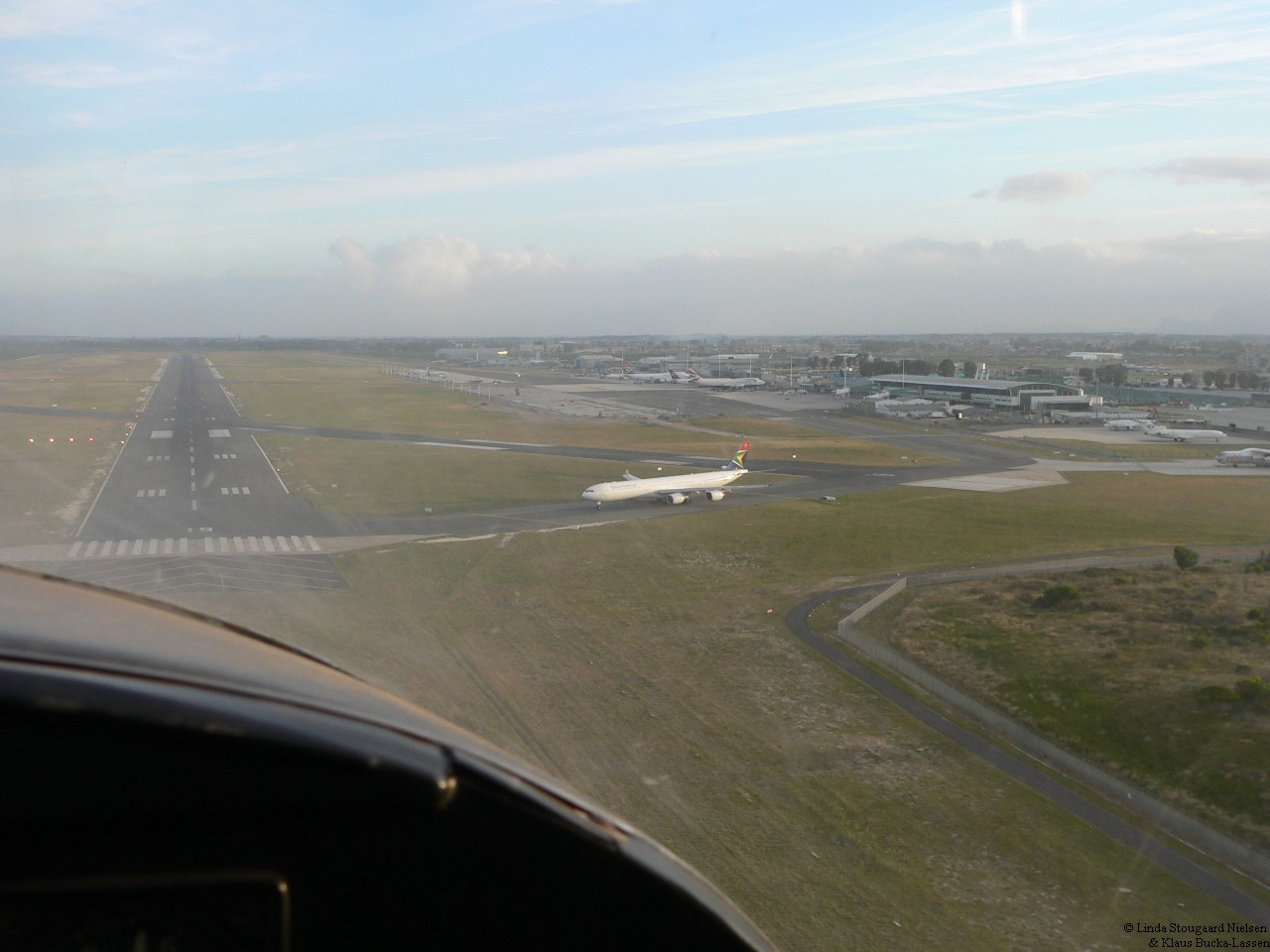
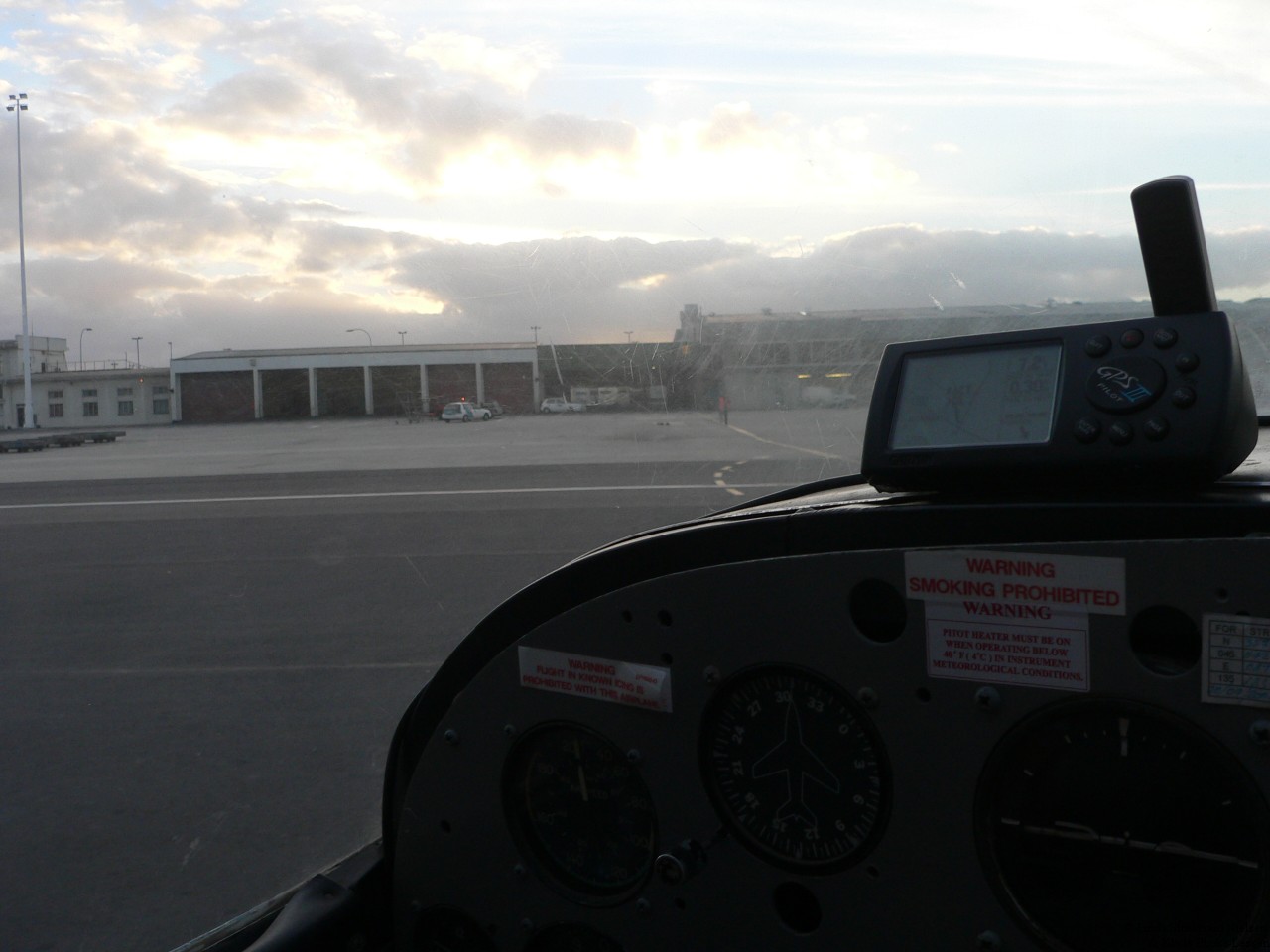
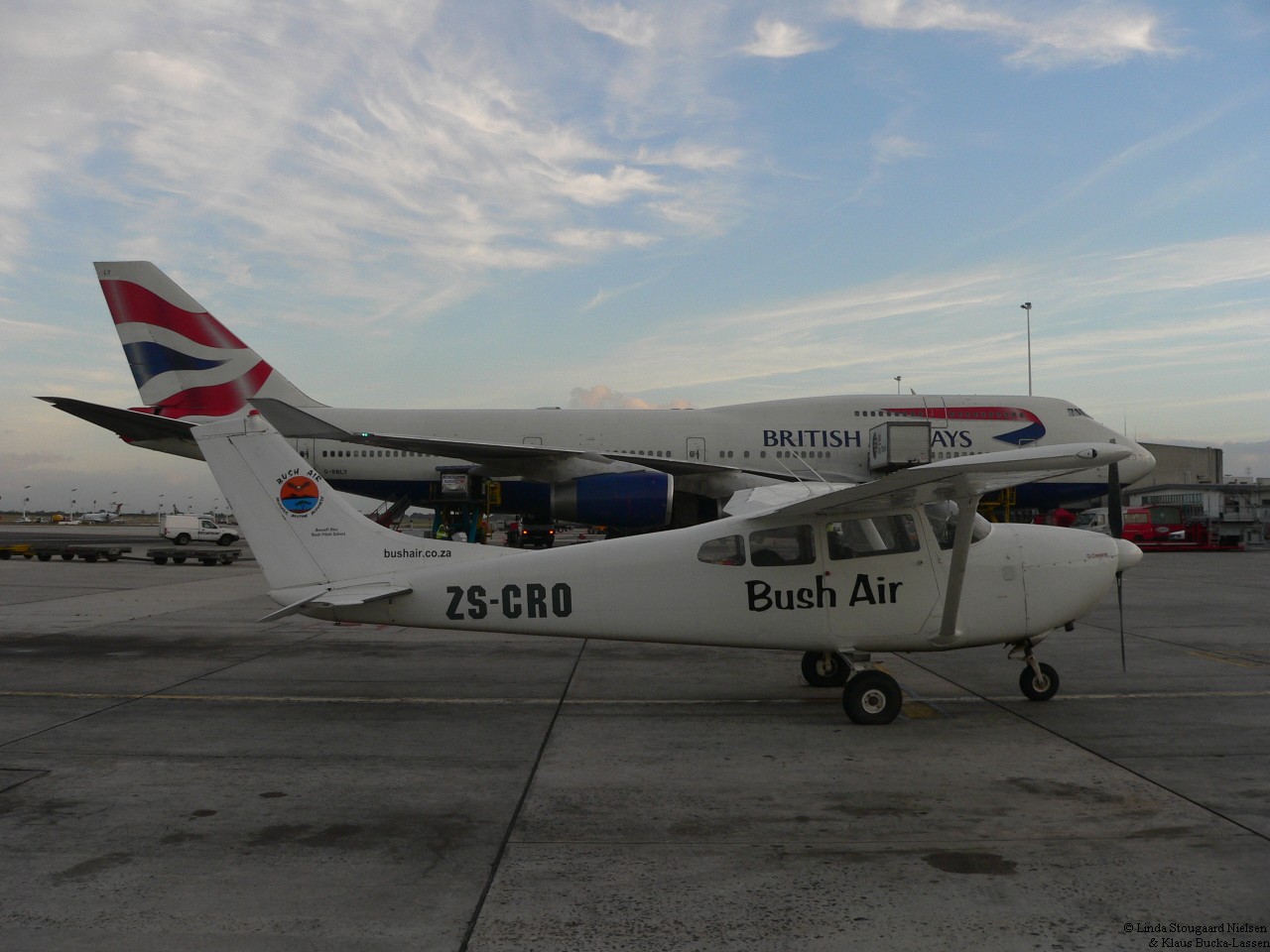
Landing in Cape Town International together with the Boings
Obviously we couldn't leave the plane parked next to the big jets so I requested taxi for the general aviation area. The traffic controller (handling all frequencies at that time, I think) was pretty busy and told me to wait. After a couple of minutes it was suggested to me that I turn of the engine as I could expect a further 10 minutes delay. We had arrived half an hour before sunset so by now it was pitch dark. Luckily there were lots of of lights at the airport, otherwise the taxiing behind all the major airline jets would have been even harder, not to say impossible (especially because the landing lights seemed to have stopped working).
There were no lights in the general aviation area whatsoever - not even taxi-lights. So Linda ran in front of our 182 and guided me with a torch. By chance only a guy from the "Aviation Business Center" was still at work and came out to help us park. They didn't have any kind of tie-downs though which would have made it a quite unsafe parking - especially in Cape Town which is renown for strong winds. Also the price would have been 185 Rand per night! So we decided to taxi further and to some parking spot with tie-downs. We left a note in the windscreen with our telephone numbers, since we had no idea who this parking area belonged to - there was not a sould in sight for miles.
I could write a book on "How to get from one side of Cape Town International Airport to the other". Walking in the general aviation area by night would be a complete chapter by itself. We ended up climbing over fences, sneaking through gates and zigzagging for 45 minutes before we finally had made it almost to the public side of the airport, when we got picked up by a taxi that drove us to our hotel in the city.
Flying in Nambibia
Landing fees seem to be fixed at NAD 91 for planes with a MTOW between 1000 and 1500. In Tsumeb we only paid NAD 40 and Opuwo was completely free (as well as Swartboistdrift, since it is an unmanned bush-strip).We never filed flight plans unless for the international flight into and out of Namibia. Alerting action (Search-And-Rescue or just SAR) would be the main reason to file flight plans, but the problem is that you don't have any radio contact with Windhoek Information (if you fly low as we did anyway) and often there also is no possibility of calling the ATC from either the departing aerodrom, the aerodrome you go to, or both.
Weather information is scarce. At most aerodromes (except Windhoek I would guess) you won't get much information. I once called the aviation meteorologist in Windhoek but that wasn't much help either. So generally speaking we did not check to much on weather. The style was pretty much "Let's get up there and if the weather looks bad in one direction, we'll just fly in another". When we came down the Skeleton Coast for instance we just re-routed to Twyfelfontein instead of trying to land at Terrace Bay or Torra Bay, which both were completely fogged up.